Warning: Undefined array key "georezo_cookies_accepted" in /var/www/html/web/inc/menu.php on line 10
Nous utilisons des cookies pour vous garantir la meilleure expérience sur notre site. Si vous continuez à utiliser ce dernier, nous considèrerons que vous acceptez l'utilisation des cookies. J'ai compris ! ou En savoir plus !.

Planet GeoRezo

Agrégateur de flux RSS - Actualités et contenus géomatiques


Kingdom Conquest Games

Kingdom Conquest Games

You would think that interactive mapping platforms are the perfect tool for building territory expansion games. However, I can think of very few good map conquest games.

There are a few popular 'Risk'-type games, such as War.app, that involve claiming and conquering territories on a map. There have also been a few 'Monopoly'-type games, such as Upland, that involve buying and selling virtual real estate on an interactive map tied directly to actual addresses in major global cities.

InkDom, however, may be the territory-grabbing game that we have all been waiting for. It turns the real world into a giant game board where you can draw a loop around your neighbourhood and claim everything inside it as your own. Even better, you also claim the people who live there.

...
Lire la suite →
Shine a Light

Shine a Light

There are plenty of maps that show you where the world's lighthouses are. Lighthouses, live does something much more interesting: it shows you how they actually work. Instead of just showing each lighthouse as a static point on a map this map gives you a sense of what its light signal actually looks like at sea.

Lighthouses, live plots charted coastal lights on a dark, night-time relief map and animates each one according to its real-world light characteristics. Some lights sweep continuously across the sea, while others flash in distinctive sequences, with the timing and colour of each beam taken from nautical charts. Impressively, terrain data is also used to block the light based on the surrounding topography, so you can actually see how each lighthouse's beam is constrained by the coastline and landscape.

...
Lire la suite →
GIScussions: ///rocky.year.survived – for how long?

GIScussions: ///rocky.year.survived – for how long?

Thanks to Zachary DeBottis

what3words’ 2025 accounts

I am fascinated by what3words, it defies the laws of finance that apply to most businesses and shows how little my old fashioned understanding of business models is relevant in the modern tech economy.

The idea of a verbal description of a 3m square as a proxy for coordinates might have sounded like a good idea a decade ago but adoption seems to have been slow and new technology may be about to overtake the idea.

...
Lire la suite →
Building Age Maps: From NYC to LA

Building Age Maps: From NYC to LA

I recently featured New York in 1.67 Million Buildings - a building age map created by Block and Paper, who have developed similar animated timelines for 80 other US cities and lots of other cities around the world.

One of those other cities is Los Angeles. However, if you want an even wider perspective, Parcelscope's Every Building in Los Angeles County lets you view an animated construction history for the entire county. Their map visualizes nearly 3 million buildings constructed since 1880.

...
Lire la suite →
The World Drawn by 3,000 People

The World Drawn by 3,000 People

These are the countries of the world as drawn by over 3,000 people on the Borderline country border game.

The object of Borderline is very simple. You are shown a map without borders and asked to draw the outline of a named country. You are then scored on the accuracy of your drawn border.  The scoring appears to be based on two measures of accuracy. The game calculates how far the real border is, on average, from your drawn line. The game also compares the length of your line with the actual length of the country's land border (drawing substantially more line than the real border can therefore hurt your score).

...
Lire la suite →
GeoSolutions: Meet GeoSolutions at Smart City Expo World Congress 2026 (Hall 2, Stand C161): open source geospatial platforms for cities

GeoSolutions: Meet GeoSolutions at Smart City Expo World Congress 2026 (Hall 2, Stand C161): open source geospatial platforms for cities

Dear Reader,

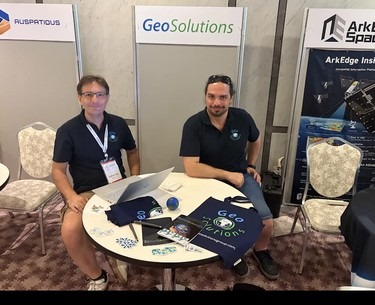
From November 3 to 5, 2026, GeoSolutions will be at Smart City Expo World Congress in Barcelona, Fira Gran Via, as part of the Italian Pavilion organised by ITA, the Italian Trade Agency. You will find Eleonora Fontana and the GeoSolutions team in Hall 2, Stand C161. If you are planning to attend and want to talk about geoportals, urban digital twins or open data infrastructure for your city, write to sales@geosolutionsgroup.com and we will book a slot at the stand.

...
Lire la suite →
The US Deportation Map

The US Deportation Map

Since January 2025, the United States has deported at least 25,447 people to countries that are not their own. According to The Guardian those deported 'include those who spent most of their lives in the US, parents detained on the school run, (and) the adult children of elderly relatives who depend on them for care.'

The Deportation Project Map lets you explore the Trump administration's global network of deportations. Click on a country on the map and you can see the number of people who have been deported there alongside a breakdown of the nationalities of those who have been deported.

...
Lire la suite →
The 540 Million Year History of the USA

The 540 Million Year History of the USA

This animated map shows the movement of the land that now makes up the United States (outlined in red) over the course of 540 million years. It was recorded from the Pangea Map, a new interactive map that “lets you explore 540 million years of continental drift, from the Cambrian explosion all the way to the present day”.

Maps such as Esri's Dance of the Continents, GPlates and Ancient Earth Globe already allow you to explore how the Earth has changed over time through shifting plate tectonics and continental drift.

...
Lire la suite →
Fernando Quadro: GeoServer + LDAP: autenticação centralizada, grupos e roles na pråtica

Fernando Quadro: GeoServer + LDAP: autenticação centralizada, grupos e roles na pråtica

Prezado leitor,

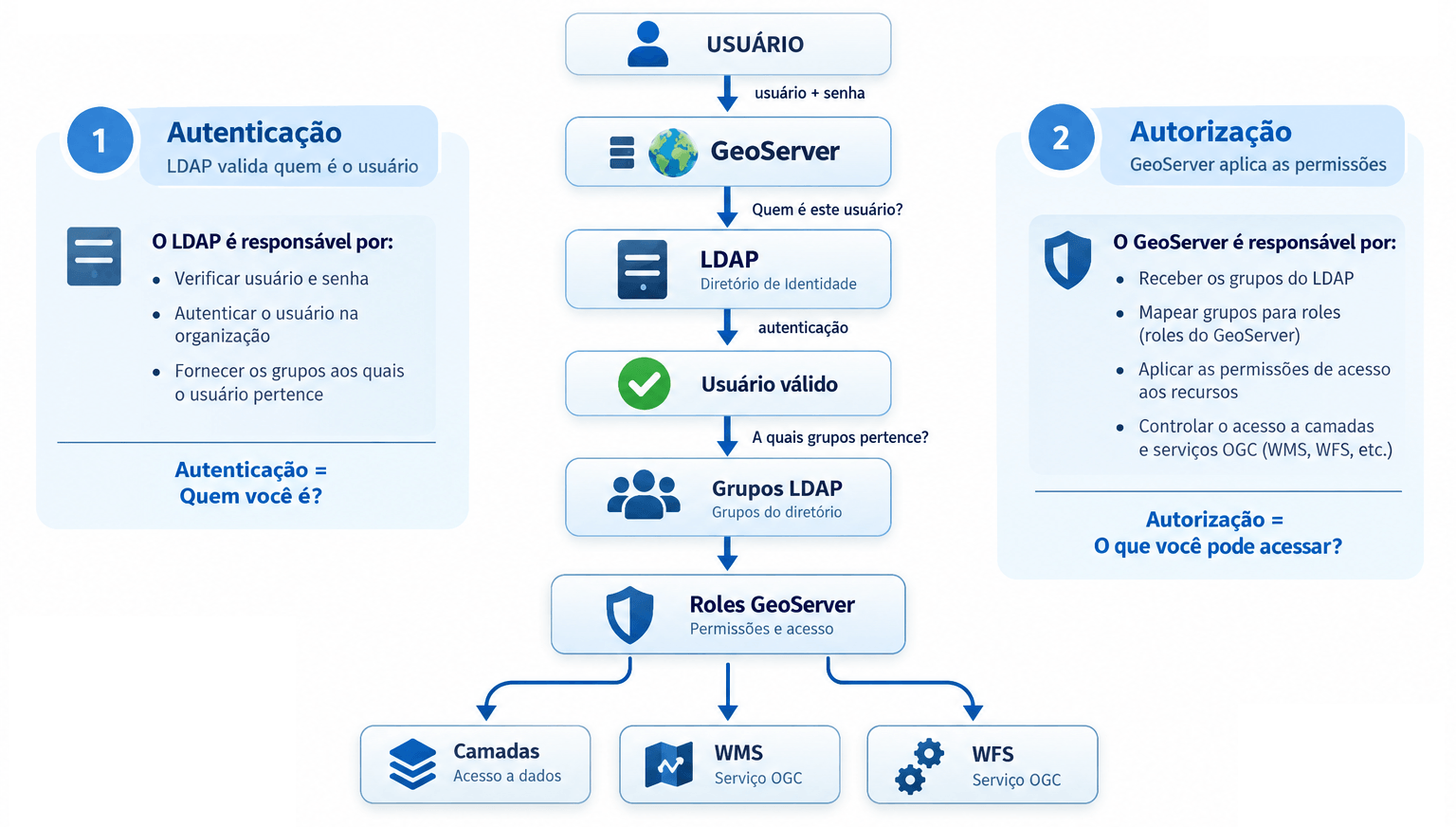
O intuito do post de hoje Ă© que vocĂȘ aprenda como integrar o GeoServer a um servidor LDAP, autenticar usuĂĄrios, transformar grupos LDAP em roles e preparar essas roles para utilização nas regras de segurança do GeoServer. O laboratĂłrio utiliza GeoServer 3, OpenLDAP e Docker Compose.

Em instalaçÔes simples do GeoServer Ă© comum administrar usuĂĄrios diretamente pela interface da aplicação. Esse modelo funciona bem em laboratĂłrios, treinamentos e ambientes pequenos. Em ambientes corporativos, porĂ©m, normalmente a organização jĂĄ possui uma infraestrutura centralizada de identidade. É nesse cenĂĄrio que entra o LDAP (Lightweight Directory Access Protocol).

Em vez de manter usuårios e senhas dentro do próprio GeoServer, podemos integrå-lo a um diretório LDAP e utilizar os usuårios e grupos existentes na organização. A arquitetura passa a ser semelhante a esta:

...
Lire la suite →
GeoWhisperer - See How the World Has Changed

GeoWhisperer - See How the World Has Changed

Since 2012, the London Legacy Development Corporation has gradually transformed the Queen Elizabeth Olympic Park from an essential local green space into a high-density residential hub driven by foreign investment. The before-and-after aerial imagery above provides a striking illustration of how the landscape of the Olympic 'park' is being built over.

This before and after image was created in a matter of seconds by GeoWhisperer. GeoWhisperer is a new tool from Henk van Ess that attempts to take some of the guesswork out of comparing satellite imagery. Designed for OSINT researchers, journalists and visual mappers, it automatically searches historical satellite imagery and uses AI to identify physical changes between different dates.

...
Lire la suite →
Free and Open Source GIS Ramblings: How to QGIS 4.2 on Linux Mint (Sept ’26)

Free and Open Source GIS Ramblings: How to QGIS 4.2 on Linux Mint (Sept ’26)

For a while now, my preferred way of installing QGIS has been from conda-forge. However, while we’re waiting for QGIS 4 to become available on conda-forge, there are alternatives:

Option 1: Flatpak

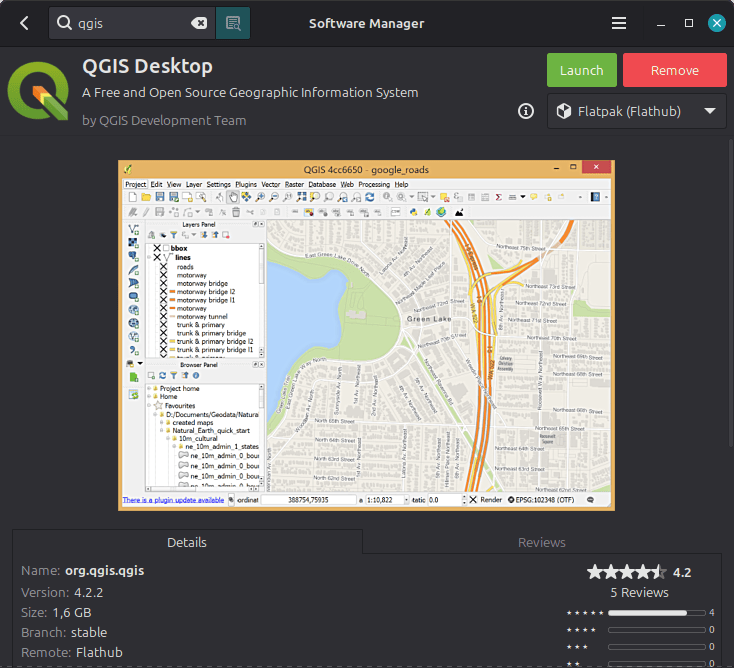
In the Software Manager, you can find QGIS from Flathub in two different versions: stable and lts. And stable should give you 4.2 (even if the Software Manager preview shows an older one):

Option 2: Meet the official QGIS Docker Images

...
Lire la suite →
GIScussions: How to Categorise 2,400 WordPress Posts

GIScussions: How to Categorise 2,400 WordPress Posts

On the Mappery site we have almost 2,400 posts on WordPress and we had never used the Category feature to sort them when we were adding posts. When we built the new Mappery Map Plugin for WordPress we included the option to only map posts in a specific category which we thought would be useful to some users in the future.Yesterday afternoon I wanted to see if there was a smart way to categorise 2,400 posts without stepping through each one in the WordPress edit interface which would have required time and dedication that I didn’t have!

I started out with this prompt:

...
Lire la suite →
Mapping the Last Ice Age

Mapping the Last Ice Age

During the Last Glacial Maximum, the European landscape looked radically unrecognizable compared to today. Enormous ice sheets flattened Northern Europe, global sea levels dropped dramatically, and the sheer weight of the ice compressed Earth's crust downward by hundreds of meters.

Europe Under the Ice is an impressive interactive mapped visualization that tracks these massive geophysical changes step-by-step from 24,100 BC all the way to the present day. Press play on the map and you can watch the ice sheets spread and retreat across Northern Europe over the millennia.

...
Lire la suite →

Kartoza: Publishing biodiversity data to GBIF, straight from BIMS

Biodiversity data is most valuable when it is shared. A river survey stored in a single database helps one team, but the same records, shared openly, can inform researchers, conservationists, and policymakers around the globe.

That is exactly what the Global Biodiversity Information Facility (GBIF) is for. It is the world’s largest open network of biodiversity data.

...
Lire l'article complet ↗
GIScussions: You CAN teach an old dog new tricks

GIScussions: You CAN teach an old dog new tricks

Yesterday I gave a talk at Geomob London on my adventures in vibe coding. The slides are pretty but probably don’t tell the whole story unless you have been reading my regular posts on my projects.

The images in the slides are all cartoons of an old dog learning new tricks and got some praise, the way I made them was interesting, so i thought I would post about it.

I started out by building an empty slide deck on Google Slides, each slide had a title and a few had a handful of words, they all had spaces for an image. I asked Claude:

...
Lire la suite →
Where’s the Perfect Weather?

Where’s the Perfect Weather?

Maps such as Pack Lightly's Best Time to Travel and Find the Best Time to Travel translate complex historical weather data into interactive heatmaps. By taking the guesswork out of trip timing, they make it easy to either match a destination with its optimal season or discover which parts of the world offer ideal weather for your travel dates.

For travelers who want deeper control over their planning, SeasonMap takes climate-based travel visualization a step further. Rather than relying on simple, static temperature averages, SeasonMap converts multi-source climate data into dynamic, activity-specific comfort scores (0–100) mapped globally for every month.

...
Lire la suite →
GIScussions: Mapping a Google Sheet – reworking the Geomob events map

GIScussions: Mapping a Google Sheet – reworking the Geomob events map

When Ed challenged me to make a map of Geomob Events on a podcast, I jumped in scraped the data and produced quite a nice map despite fighting a battle with Gemini to extract the data for the map from the markdown files of the Geomob website. The problem, as Ed pointed out retrospectively was that the events map was going to be difficult to maintain as further events got scheduled, it was very much a snapshot at a point in time and my suggestion that someone could edit the json file of events was not very practical.

...
Lire la suite →
170,000 Movies - One Interactive Map

170,000 Movies - One Interactive Map

I recently reviewed the Movie Scene Map, an interactive map that makes it easy to find which iconic movie scenes were filmed right around the corner from your house.

However, the fact that a film was shot near you doesn't necessarily mean that the movie is set in your neighborhood. In many cases, filmmakers use one location to stand in for another, either because it's cheaper, more convenient, or simply looks the part.

For example, Stanley Kubrick's Eyes Wide Shut, while set almost entirely in the moody, nocturnal streets of Greenwich Village and Manhattan, was shot almost entirely in London. Even more astonishingly, London was also used to create some of the iconic, sweat-soaked Vietnam jungle scenes in Full Metal Jacket.

...
Lire la suite →
GeoSolutions: GeoSolutions at FOSS4G 2026 in Hiroshima

GeoSolutions: GeoSolutions at FOSS4G 2026 in Hiroshima

Dear Reader,

We are back from FOSS4G 2026 in Hiroshima, Japan, and we want to share what we presented and what we brought home. With up to 14 parallel tracks, this year's global edition was dense: two days of workshops, three days of talks, and plenty of conversations at the booth.

GeoSolutions attended with one representative per product line: Andrea Aime for GeoServer, Lorenzo Natali for MapStore and Stefano Bovio for GeoNode. Together they delivered 5 workshops and 14 presentations, and GeoSolutions supported the event as a sponsor, continuing our long-standing commitment to the OSGeo community and to open geospatial standards.

...
Lire la suite →
Blowing Up the World Becomes More Fun

Blowing Up the World Becomes More Fun

Blowing up the world has now become even more fun.

We have all had a lot of fun nuking cities around the world with existing nuclear bomb simulators like NUKEMAP, Outrider - Bomb Blast and Ground Zero. But what has been missing to truly satisfy our sadistic, mass-murdering instincts is a really satisfying level of realism.

Thankfully, that has all changed with the 'launch' of the 3D Nuclear Blast Simulator. This new map-based nuke simulation not only lets you choose any location around the world to assess the likely number of human casualties from dropping a nuclear bomb on the area, but also simulates the explosion with a satisfyingly new degree of realism.

...
Lire la suite →
Free and Open Source GIS Ramblings: MovingPandas is moving to Codeberg

Free and Open Source GIS Ramblings: MovingPandas is moving to Codeberg

I’ve been testing Codeberg for over a year now, with Trajectools being the largest repo that has already moved its headquarters from Github to Codeberg.

I have been very happy with the experience so far and – at the same time – I couldn’t help but notice the further decline of Github performance.

Therefore, in the upcoming weeks, I am planning to move the remaining MovingPandas repos. For anyone who wants to contribute, this means that:

...
Lire l'article complet ↗
GeoGuessr Gets an Antipodean Time Machine

GeoGuessr Gets an Antipodean Time Machine

Continuing my quest to catalog every GeoGuessr spinoff in existence, today's menu features two fresh location-guessing challenges: TimePin and Oppocity.

TimePin is a GeoGuessr-style game with a historical twist. Your task is to guess not only where a character is from, but also when they lived. 

Each round presents you with environmental photos and a character you can question about their life and surroundings. You have 12 questions available, but can only ask five, so you'll need to choose carefully. The clues might help you narrow down both the location and the historical era. 

Once you've made your deductions, drop a pin on the interactive map and use the time slider to select your date. The closer you get to the correct place and time, the more points you earn. 

...
Lire la suite →
PIxel City Maps Are Here

PIxel City Maps Are Here

Isometric NYC has definitely started a new trend for developing pixelated interactive city maps. In the last few weeks it has inspired Isopolis in San Francisco and London, drawn in London. Now a new project is taking the idea to Brazil - and suggests that we could soon be seeing a lot more of these pixelated cities.

EARTH TO PIXELS

earthToPixels has now transformed aerial imagery of João Pessoa, a coastal city in northeastern Brazil, into a sprawling, SimCity-style isometric pixel-art map.

Like the earlier maps, the pixelated map of JoĂŁo Pessoa is a joy to explore. Buildings, roads, parks and coastline are transformed into a giant isometric pixel-art landscape that you can pan and zoom through, revealing more detail as you explore.

...
Lire la suite →
Mapping the Song Every City is Listening To

Mapping the Song Every City is Listening To

What is the world listening to today? Rotation's Music Map offers a wonderfully simple way to explore that question, with a globe showing the songs currently charting in 166 countries and 174 cities.

Each place on the globe highlights a record that the rest of the world isn't playing. Click on a country or city and the record starts playing, turning the map into a kind of interactive global jukebox. You can also switch between different chart sources, including Spotify, Apple Music and Shazam, to see how the picture changes.

One of my favourite features is the Shuffle option. Rather than simply choosing a random country, it works like a loaded die: it picks a record, then a place, and explains why that particular combination has been selected. It is a nice way of discovering music from places you might otherwise never think to explore.

...
Lire la suite →

W3C Maps for HTML Community Group: What if the Map itself became the Web? — Hyper-Layering at SotM Asia 2026

On September 7, 2026, I gave a keynote at State of the Map Asia 2026 in Osaka.

The title was:

What if the Map itself became the Web?

The talk looks back at the thirty-year journey of Hyper-Layering Architecture (HLA), from its origins in 1995 to its current implementation as Layers as Web Apps.

The central idea is simple: instead of collecting and integrating information into a central system, independent Web resources can remain independent while users compose them together as map layers in the browser.

...
Lire la suite →
New York's 1.67 Million Buildings Colored by Age

New York's 1.67 Million Buildings Colored by Age

The craze for building age maps seems to have faded in recent years, which is a shame because I think they can reveal a surprising amount about how a city has grown and changed over time. When you map the age of every building, patterns of development, expansion and redevelopment can suddenly become much easier to see in a way that is hard to grasp from standard historical records.

...
Lire la suite →
Sean Gillies: Run Rabbit Run training week sixteen

Sean Gillies: Run Rabbit Run training week sixteen

Number sixteen was my peak volume week. My biggest training week in three years (not counting the Bear races of 2023 and 2025).

  • 17 hours, 27 minutes all training

  • 52.2 miles hiking and running

  • 14,938 ft D+ hiking and running

I went out on steep mountain trails five times to prepare for the big initial climb, high altitude, and big finishing descent of Run Rabbit Run (RRR). I did more power hiking than running on the climbs, and worked on descending with fast feet and momentum. I'm not planning to use poles at RRR, so I left them behind all week.

Tuesday I hiked and ran up the Round Mountain trail in the Big Thompson Canyon. 3,000 feet of climbing in less than five miles is a good simulation of the climb up Steamboat Mountain. There is some very pretty scenery on the trail, too.

...
Lire la suite →

Sean Gillies: Run Rabbit Run training weeks twelve through fifteen

Weeks twelve through fifteen had a little better air quality and I increased my training volume steadily, transitioning to more uphill outings and more power hiking.

  • 56 hours, 15 minutes all training

  • 125.8 miles running and hiking

  • 26,420 ft D+ running and hiking

In week fifteen, I logged 10,000 feet of elevation gain (D+) for the first time this year. And I felt good after eight consectutive days of hiking and running.

Lire l'article complet ↗
Sean Gillies: Run Rabbit Run training weeks eight through eleven

Sean Gillies: Run Rabbit Run training weeks eight through eleven

Week eight began in Glacier National Park and week eleven finished in Steamboat Springs.

  • 51 hours, 47 minutes all training

  • 116 miles running and hiking

  • 16,903 ft D+ running and hiking

Hiking with my oldest kid in Glacier and Grand Teton Nation Parks was one of the highlights of this year. Arabelle has become a strong hiker (summiting nine of Colorado's fourteeners this summer) and is great company on the trail. Hiking options were limited in Glacier, which was recovering from torrential rain and washed out trails, but the Tetons were wide open to exploring. Our big hike was to trendy Delta Lake below Teton Glacier.

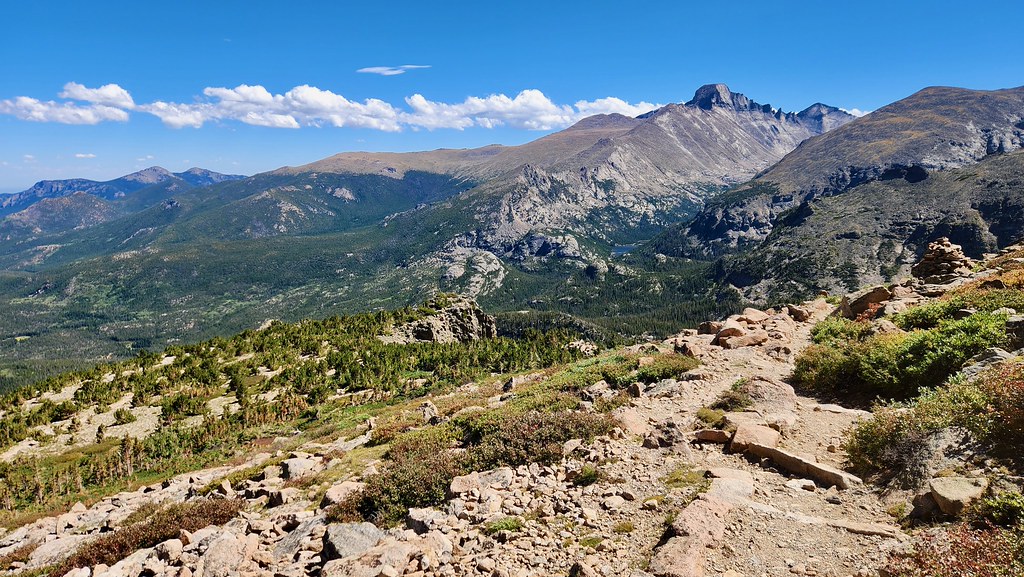
A sprawling four-story wooden lodge on the edge of a greenish lake with big peaks in the background. Glacier National Park, Montana, U.S.A.

...
Lire la suite →
Which Country is Bigger? The Map Decides

Which Country is Bigger? The Map Decides

Since the UN General Assembly voted to promote equal-area projections such as Equal Earth as an alternative to the familiar Mercator projection, there have been a number of interesting attempts to show just how much our perception of the relative size of countries changes when we switch between the two.

(my attempt was this animated tween between a Mercator vs Equal Earth projection)

...
Lire la suite →
GIScussions: Playing with Pub Names

GIScussions: Playing with Pub Names

I recently posted about the build of my “A Pint Near Me” app. When I had finished the build I asked Claude “Can you give me a few interesting stats from the pubs data?”

  • The most 5 common names?
  • How many single name pubs (ie not repeated)?
  • Any regional patterns in naming?
  • Anything else?

Pause for a minute and see if you can guess the answers, maybe have a play with the map to test your guesses before you scroll down.

Answers

These answers were all generated by Claude based on the prompt above.

...
Lire la suite →
GIScussions: A Pint Near Me – what you do after 15 seconds of fame

GIScussions: A Pint Near Me – what you do after 15 seconds of fame

A while after I blogged about my Pub Density Map it got picked up by Hacker News and the map got a big spike in views. Some of the comments were complaints that a pub was missing or that the pubs data was not searchable, some were less helpful. I had used the Open Pubs data from GetTheData, which in hindsight, was maybe not the best choice, the data was quite rough and a bit out of date but it seemed fit for my purpose of illustrating the areas of the country with highest pub density (pubs per 10k population), I had included the pub points just because I had them and that had attracted the most criticism.

...
Lire la suite →
Your Daily GeoGuessing Challenge!

Your Daily GeoGuessing Challenge!

TripGeo Snaps is a new GeoGuessr type game with a difference. Instead of being dropped into a Street View panorama that you can explore, you are shown a static Street View snapshot. You can't pan around, follow the road or search for clues elsewhere. You have to identify the country purely from the visual clues contained in the image in front of you.

Every game presents you with five locations. Each image initially appears through a small spotlight, so you only get a limited glimpse of the scene. You then have three chances to identify the country from a list of eight possibilities.

...
Lire la suite →
QField: QField 4.3 “Danube”: Summer of stability

QField: QField 4.3 “Danube”: Summer of stability

The next version of QField is here. While this time of the year is a well-deserved holiday period for many, we’ve dedicated ourselves to improving the stability and refining of your favorite field mapping tool.

We’re calling this effort the “summer of stability”, a sprint we will undertake on a yearly basis. But there are plenty of improvements to cover, so let’s go over them.

Main highlights

Bookmark manager

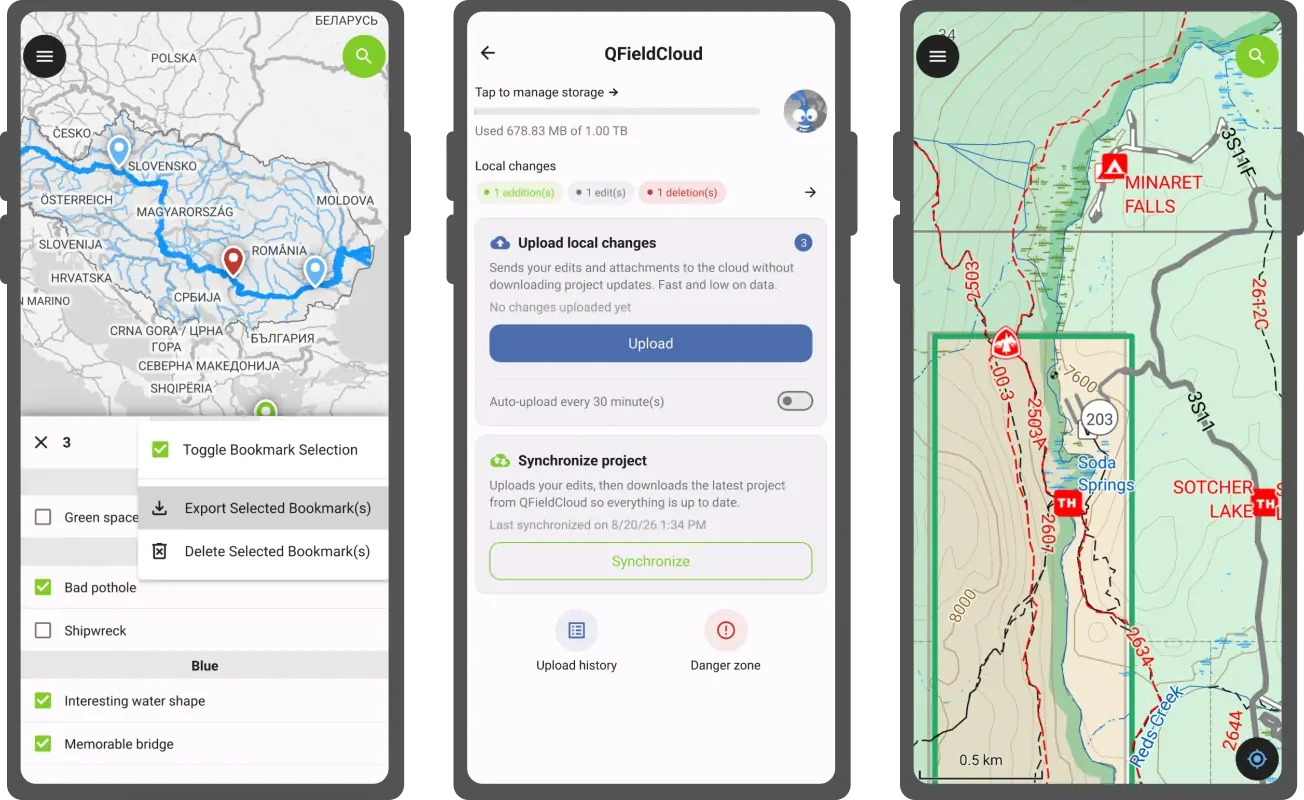
First, we’ve introduced a new bookmark manager to make QField’s experience around spatial bookmarking feel more complete. With the manager accessible via the dashboard’s main menu – users will be able to browse their bookmarks as a full list with the ability to quickly jump to a bookmark’s location by tapping its name, as well as edit its properties.

...
Lire la suite →

PostGIS Development: PostGIS 3.7.0rc2

The PostGIS Team is pleased to release PostGIS 3.7.0rc2! Best Served with PostgreSQL 19 Beta 3 , GEOS 3.15.0 , postgis_tiger_geocoder 2025.2 , and address_standardizer.

This version requires PostgreSQL 14 - 19beta3, GEOS 3.10 or higher, Proj 6.1+, and libgmp. To take advantage of all features, GEOS 3.15+ is needed. To take advantage of all SFCGAL features SFCGAL 2.3.0+ is needed. To use postgis_raster extension GDAL 3+ is required.

...
Lire l'article complet ↗
Geography and Genetics

Geography and Genetics

How closely related are the world's populations? 

The Genetic Distance Map offers a fascinating way to explore that question by putting genetic similarity onto a map. Click on this map and the surrounding areas are then colored according to genetic distance. The result is a visual landscape of genetic similarity, with similar colours indicating populations that are genetically closer to one another.

For most populations, the Genetic Distance Map displays smooth, concentric rings radiating outwards. In many locations, geographic distance mirrors genetic distance (e.g., clicking on central France highlights neighboring regions in Western Europe). As you might suspect populations that live close together are often genetically similar.

...
Lire la suite →
OSGeo Announcements: [OSGeo-Announce] pgRouting version 4.0.2 released

OSGeo Announcements: [OSGeo-Announce] pgRouting version 4.0.2 released

OSGeo pgRouting version 4.0.2 released - OSGeo

The latest release is available at Github. For discussions on the release here. To see all issues & pull requests closed by this release see the Git closed milestone for 4.0.2 on GitHub. Summary of changes by function pgr_dijkstraVia Fix: 
 Continued

Est. reading time: 1 minute

Hello pgRouting community,

The pgRouting Team is pleased to announce the release of pgRouting version 4.0.2

The latest release is available at [1]. For discussions on the release, go to [2]. To see all issues & pull requests closed by this release see the Git closed milestone for 4.0.2 on Github. [3]

## Summary of changes by function

...
Lire la suite →
Mercator vs Equal Earth

Mercator vs Equal Earth

The UN General Assembly has just endorsed a new position on world maps that aims to represent the relative size of the world's land masses more accurately, with the difference being particularly obvious when you compare Africa and Greenland. The resolution, backed by 164 countries, promotes the use of equal-area projections such as Equal Earth as an alternative to the familiar Mercator projection.

So, naturally, I made a map.

Mercator vs Equal Earth

Rather than simply putting the two projections side-by-side, this interactive map lets you watch one transform into the other. Click Mercator or Equal Earth to switch between them, or sit back and let the map automatically tween between the two.

And the transformation is quite revealing.

...
Lire la suite →
Welcome to the New World Map

Welcome to the New World Map

Yesterday the UN General Assembly voted to replace its traditional world maps - based on Mercator - with a map that more accurately reflects the size of Africa - based on the 2018 Equal Earth map.

My Equal Earth vs Web Mercator map allows you to compare how these two maps depict the world side-by-side. Drag the handle in the middle of the map and you can switch between the two projections. You can also pan and zoom around the map and the two views will move together.

Equal Earth vs Mercator

The problem with Mercator isn't that it is a "bad" map. Quite the opposite: Gerardus Mercator's 1569 projection was designed for sea navigation, where preserving angles and directions is enormously useful. The problem is that it is a rather unfortunate choice when you want to compare the size of countries and continents.

...
Lire la suite →
MapDraw: Take the Scenic Route

MapDraw: Take the Scenic Route

MapDraw

I use Organic Maps every day. Currently, I'm using it to follow the London Loop, with the route loaded as a GPX track on the map.

I often get annoyed with the London Loop route - particularly when it takes me along a busy road when I can see what looks like a much more pleasant alternative just a few metres away. What I need is a simple tool that will allow me to draw my own alternative routes for the sections I don't like and save them as GPX files, which I can then add to Organic Maps.

...
Lire la suite →
OSGeo Announcements: [OSGeo-Announce] Ian Turton receives the 2026 Sol Katz Award

OSGeo Announcements: [OSGeo-Announce] Ian Turton receives the 2026 Sol Katz Award

OSGeo Ian Turton receives the 2026 Sol Katz Award - OSGeo

Ian has been a member of our community from the very beginning, as an original voting member who gathered in Chicago in February 2006 to establish OSGeo. He also is a co-founder of GeoTools, the Java library that is the 
 Continued

Est. reading time: 2 minutes

We are honoured to announce that Ian Turton is the recipient of the
2026 Sol Katz Award (the 22nd year of the award), at the recent FOSS4G
event in Hiroshima, Japan.

...
Lire la suite →
Crawley – Welcome to Music Town, UK

Crawley – Welcome to Music Town, UK

My home town of Crawley is apparently the undisputed heavyweight champion of British music.

At least, that is what you might conclude from the UK Music Cities Explorer. When the interactive map's results are normalized by population, Crawley appears as the largest circle on the map, giving it the highest Spotify-listener footprint per resident of any UK urban area in the explorer.

Not bad for a small town in the south of England.


The UK Music Cities Explorer is an interactive exploration of the geographical origins and global popularity of British bands. Using the map, you can search for individual bands or places, explore where artists were formed, compare Spotify monthly listeners and followers, and switch between raw totals and results normalized by the population of each urban area.

...
Lire la suite →
Movie Maps

Movie Maps

Have you ever watched a film and thought, “Wait, I know that street”? A new interactive mapping project makes it easy to find out which iconic movie scenes were filmed right around the corner from your house.

Movie Scene Map turns the globe into an open-air film set. It allows you to explore real-world locations from your favourite movies and TV shows, making it easy to track down specific filming locations - and maybe even visit them in person on your next walk or weekend getaway.

...
Lire la suite →
The Coffee Barista's Maps

The Coffee Barista's Maps

Aside from maps, I would say my next biggest obsession is coffee. For the last couple of months, my favourite bean, Finca La Bolsa, has been out of season and unavailable from my local roasters. I've therefore been using the opportunity to experiment with beans from different regions, different taste profiles and different processing methods.

For some reason, it has only just dawned on me that there might be some coffee maps I can use to help me discover new beans to add to my coffee repertoire.

...
Lire la suite →

Kartoza: Under the Hood: Lightning-Fast Spatial Queries with PostGIS

Preparing for Scale Before It Hurts

While working on a recent client project involving a PostgreSQL and PostGIS database, I was working with just a few hundred spatial records. Everything ran relatively smoothly, but a slight lag during query execution got me thinking: If an unoptimised query takes noticeable time on a dataset this small, what happens when the project scales to tens of thousands or millions of features?

In spatial databases, performance problems rarely scale linearly. An unoptimised query that takes a fraction of a second on a few hundred points can easily take hours or freeze your system entirely at production scale. Imagine you eventually scale up to 5 million building footprints and 50,000 points of interest (POIs) in your PostGIS database. You want to find out which buildings contain a POI, so you write a standard spatial join:

Lire l'article complet ↗
How Great is Great Britain?

How Great is Great Britain?

How long is the coastline of Great Britain?

Go on. Have a guess.

It sounds like the sort of question that should have a straightforward answer. Surely someone, at some point, has walked around Britain with a very long tape measure and worked it out.

Unfortunately, the coastline has other ideas.

The problem is that Britain's coast is full of bays, headlands, inlets and innumerable little squiggly bits. Measure it using a fairly large ruler and you'll skip over much of that detail. Use a smaller ruler and suddenly you're measuring around all those extra twists and turns - and Britain's coastline mysteriously gets longer.

This is the Coastline Paradox: the awkward fact that there isn't really one definitive answer to the question How long is the coastline of Great Britain?

...
Lire la suite →
15 Minute Towns Animated

15 Minute Towns Animated

The 15-Minute City has become one of the most influential ideas in contemporary urban planning. Popularised by urbanist Carlos Moreno, the concept is beautifully simple: cities should be designed so that people can reach the things they need for everyday life - shops, healthcare, schools, green spaces, culture and leisure - within around 15 minutes of where they live, ideally on foot or by bicycle.

...
Lire la suite →
Rename Lake Ontario Now!

Rename Lake Ontario Now!

You don't have to wait for Donald Trump to rename Lake Ontario. Thanks to MapQuest, you can now direct all your small dick energy into hitting Canada where it really hurts - by taking a Sharpie to Canada's geography yourself.

Canada's slow-witted response to the latest U.S. trade war has been to impose tariffs on a range of American imports, thereby increasing the cost of goods for American consumers. Donald Trump, meanwhile, has once again demonstrated why he is known as the "master of the deal" by halting trade talks with Canada and striking back where it really hurts - in the "feels" - with an announcement that he intends to rename Lake Ontario as "Lake America."

...
Lire la suite →
GIScussions: Amazing Animals on the IUCN Red List – a massive project that I couldn’t have considered without Claude Code

GIScussions: Amazing Animals on the IUCN Red List – a massive project that I couldn’t have considered without Claude Code

This might be a long post, it was a pretty challenging project.

I wrote last week about my Amazing Animals in Crisis map of 50 endangered species, I got some bad news on Friday that my usage of the IUCN polygon data was in breach of their licencing conditions and a request that I take the map down, which I promptly did. This was a big disappointment as I was just about to expand the map to almost 400 species and now I had no data.

Learning – even if data is apparently free and open, carefully read the license conditions before you use it. Obvious, I know, but I had to learn the hard way.

...
Lire la suite →
GTA - San Francisco

GTA - San Francisco

Have you ever wanted to play GTA in San Francisco? In San Francisco - The Game, you can now drive cars, climb buildings or even hang-glide over the Bay Area - all in your browser.

What makes this game world particularly interesting from a mapping perspective is that this isn't a fictional city inspired by San Francisco. The game's 3D world is built from real-world photogrammetry and elevation data, extracted from Apple Maps 3D data and converted into a playable open-world environment.

The result is an extraordinary browser map that doubles as a game. San Francisco's famously steep hills, dense streets and distinctive buildings are all rendered as a detailed 3D landscape. You can explore the city on foot, clamber over buildings and rooftops, jump into one of the cars scattered around the streets, and even fly over the city strapped to a hang-glider.

...
Lire la suite →

GRASS GIS: Google Summer of Code 2026 results

Two GSoC contributors wrapped up their summer with GRASS! Another Google Summer of Code is coming to an end, and we are happy to report that both GRASS projects finished successfully. Over the summer, Kaushik Raja and Saket Kumar Mall worked with their mentors on two very different parts of GRASS: making raster processing faster on multi-core machines, and bringing time series into the graphical interface. Between them they contributed more than 30 merged pull requests.
Lire l'article complet ↗
Mapping 219,469 Rail Journeys

Mapping 219,469 Rail Journeys

One Day on Rails maps more than 70,000 train journeys across Europe during one single day this summer. It also maps 5,737 journeys across the USA, 34,206 journeys in Tokyo and 11,075 journeys in London.

One Day On Rails visualizes an entire day's railway activity on one single animated interactive map. Rather than showing trains at a single point in time, One Day on Rails uses real timetable data to animate thousands of services moving along their actual routes.

The main European visualization combines railway data from Germany, the Netherlands, Belgium, Luxembourg, Switzerland and France. In total, it maps 70,427 scheduled journeys, with cross-border services carefully deduplicated so that the same train isn't counted twice when it appears in different national datasets.

...
Lire la suite →

PostGIS Development: PostGIS 3.7.0rc1

The PostGIS Team is pleased to release PostGIS 3.7.0rc1! Best Served with PostgreSQL 19 Beta 3 , GEOS 3.15.0rc1 , postgis_tiger_geocoder 2025.2 , and address_standardizer.

This version requires PostgreSQL 14 - 19rc1, GEOS 3.10 or higher, and Proj 6.1+. To take advantage of all features, GEOS 3.15+ is needed. To take advantage of all SFCGAL features SFCGAL 2.3.0+ is needed.

This release contains fixes since 3.7.0beta2 release.

...
Lire l'article complet ↗

PostGIS Development: PostGIS Tiger Geocoder 2025.2

The PostGIS development team is pleased to provide postgis_tiger_geocoder extension. This is the very second release since the break from the PostGIS core. This version requires PostgreSQL 16 and above and should work with any supported PostGIS version.

PostGIS 3.6 series is the last series to include postgis_tiger_geocoder. PostGIS 3.7 will be shipped without postgis_tiger_geocoder.

postgis_tiger_geocoder has its own dedicated repo at OSGeo Gitea postgis_tiger_geocoder under the PostGIS org.

The versioning model is versioned based on the year of the Census US Tiger dataset that is current at time of it’s release.

Lire l'article complet ↗
Bending Maps, Inception Style

Bending Maps, Inception Style

One of the most memorable scenes in Inception sees Leonardo DiCaprio's character walking through Paris as the city appears to fold in on itself, with entire streets rising from the ground and bending over the characters below. The surreal effect makes the city seem like a three-dimensional model that can be manipulated like a sheet of paper.
Orbify is exploring whether something inspired by this visual trick could have a practical use in car navigation. Orbify's patent-pending image-processing system takes a 3D map model and warps it onto a curved surface. Instead of having to choose between a conventional top-down map and a perspective view of the road ahead, both can be displayed simultaneously in a single image.
Close to the vehicle, the map retains a normal perspective view, showing the roads and buildings around you in three dimensions. Further away, the map gradually bends upwards until it bec...
Lire la suite →
The 3D Underground Map

The 3D Underground Map

DrillerDB Underground is very different from a conventional map, which presents the Earth's surface as a flat 2D view from directly above. Instead, it offers a striking oblique 3D view where the surface of the earth has been sliced open like a layer cake. Rising above the horizon is standard aerial imagery draped over USGS 3DEP elevation data, but the real star of this map lies directly underneath: a volumetric 3D cross-section revealing the actual geological strata layered beneath the surface.

Turning 13 Million Well Logs into 3D Geology

...
Lire la suite →
Kartoza: 21 Million Pulls: The Story Behind Kartoza's Geospatial Docker Images

Kartoza: 21 Million Pulls: The Story Behind Kartoza's Geospatial Docker Images

If you have ever spun up a PostGIS database or deployed GeoServer in a container, there is a good chance you pulled an image built by Kartoza. As of mid-2026, our geospatial Docker images have been pulled over 21 million times on Docker Hub. That number quietly astonishes even us. We are a small team based in Cape Town and Stellenbosch, yet our containers sit in CI pipelines, university labs, government servers, and humanitarian deployments on every continent.

Lire l'article complet ↗
Surfing the Jet Stream

Surfing the Jet Stream

Anyone who has ever flown from America to Europe has probably noticed that the outward flight usually takes considerably less time than the return journey. The reason is the jet stream - fast-moving winds high in the atmosphere that generally blow from west to east. Flying east, aircraft can get a significant push from these winds, while flying west means battling against them.

The same phenomenon affects flights to Hawaii, and Flight Map from HawaiiTravelers lets you explore exactly how much extra time the winds appear to add to the journey.

...
Lire la suite →
Oslandia: QGIS User Conference 2026 – Laax

Oslandia: QGIS User Conference 2026 – Laax

Oslandia will be attending the 2026 QGIS User Conference, which is taking place this year 5-6 October in Laax, Switzerland

Workshop QGIS Expressions: From Labels to Geometry Generators (by Benoit de Mezzo | Monday, October 5, 11:30 AM)
Deploying QGIS in large IT systems – best practices (by Vincent Picavet | Monday, October 5, 2:30 PM)
Mental health and OpenSource, tough topic for engineers (by Vincent Picavet | Monday, October 5, 4:00 PM)
From Users to Contributors: Rethinking Participation in QGIS (by Jean Felder | Monday, October 5, 4:30 PM)

The QGIS User Conference is an annual event that brings together users and developers of the QGIS open-source geographic information system (GIS). The conference offers an opportunity to discover the latest developments in QGIS, share real-world experiences, and network with the global QGIS community across administrations, industry, academia, and beyond.

...
Lire la suite →
The 2026 Fall Foliage Map Has Landed

The 2026 Fall Foliage Map Has Landed

SmokyMountains.com has been producing its fall foliage maps for more than a decade. The Smoky Mountains 2026 Fall Foliage Prediction Map has now been released to visualize this year's expected progression of fall foliage across the contiguous US. 

Rather than simply highlighting where autumn is happening now, the interactive map lets you travel through the season week by week to see when different parts of the country are expected to change colour. The map divides the US into counties, with each county coloured according to its predicted foliage stage. The legend ranges from No Change and Minimal through Patchy, Partial, Near Peak, Peak and Past Peak. This makes it particularly easy to see the gradual movement of autumn across the country.

...
Lire la suite →
How to Win the World Cup - From Above

How to Win the World Cup - From Above

Spain's 2026 World Cup win was hardly a massive surprise to football fans. It was another chapter in what has become an extraordinary period of Spanish dominance in international football. Spain won the European Championship in 2024 and the Nations League in 2023, and the Spanish women are the current World Cup holders. They also came agonisingly close to adding the 2025 Women's European Championship, only losing to England on penalties in the final.

Spain's success didn't come from nowhere. Behind the country's seemingly endless supply of talented footballers is la cantera - literally "the quarry" - the system of youth academies and local football infrastructure that develops the country's players.

...
Lire la suite →
Where Area Equals People

Where Area Equals People

What would the world look like if countries were resized according to the number of people living in them? You can explore that question in Gapmover, an map that shows how the relative size of countries has changed from 1800 and is projected to change through to 2100.

Unlike a conventional map, this animated population cartogram continually distorts the shapes and sizes of countries so that their area reflects their share of the world's population. As you drag through the timeline, countries swell and shrink, offering a striking visualisation of the changing balance of population around the globe.

...
Lire la suite →
Mapping All Our Yesterdays

Mapping All Our Yesterdays

If you want to take a trip through the history of Richmond, Virginia, Yesterdays is a wonderful place to start. This interactive map brings together thousands of historical photographs and pins them to the places where they were taken.

You can simply browse the map and see what photographs have been recorded in different parts of Richmond, or search the collection by date, subject and other data. For example you can set the timeline control to just view photographs of Richmond taken in the 19th Century. The result is a wonderfully addictive way to explore Richmond - one photograph, street and neighbourhood at a time.

...
Lire la suite →
TorchGeo: v0.10.0

TorchGeo: v0.10.0

TorchGeo 0.10.0 Release Notes

TorchGeo 0.10 is the largest release in TorchGeo history, with a record 220 PRs from a record 29 contributors over the last 6 months. It includes full time series support, fiscal sponsorship, and security hardening, among many other exciting new features!

Highlights of this release Full time series support

The last two years have seen a dedicated effort to add full time series support to TorchGeo. As of this release, TorchGeo contains dozens of time series benchmark datasets:

...
Lire la suite →
Where does the North Begin?

Where does the North Begin?

One of the perennial questions in UK politics and geography is “where is the border between the North and South?” I can now definitively answer that question thanks to MapSplit.

Giuseppe Sollazzo’s MapSplit interactive map allows you to map any UK-specific dataset and then “draw a movable straight line across the UK” to view a statistic for each side. This means I was able to upload all the Greggs outlets in the UK onto Giuseppe's map and instantly discover the dividing line across the country where there are an equal number of Greggs north and south of the line. Ending, forever, the debate about the border between the North and South.

...
Lire la suite →

Kartoza: Kartoza's QGIS Plugins: Extending QGIS for Real-World GIS Workflows

QGIS is powerful out of the box, but its real superpower is extensibility. For over a decade, Kartoza has been building, sponsoring, and maintaining QGIS plugins that solve genuine geospatial problems — from cadastral surveying in South Africa to monitoring land degradation for the United Nations Sustainable Development Goals. This post is a quick tour of the plugins we ship, where to find them, and how they fit into a modern open source GIS workflow.

Lire l'article complet ↗
How to Find the Best Sunset Views

How to Find the Best Sunset Views

If you want to discover the best spots nearby to watch the sunset, then you need the Sunset Atlas. Choosing a good local spot to watch the sun disappear below the horizon can involve a fair amount of trial and error. Sunset Atlas takes some of the guesswork out of finding the perfect sunset viewpoint by mapping sunset viewing conditions across Europe.

The interactive map uses a colourful heatmap to show the quality of sunset views, with warmer colours indicating locations where the setting sun has a more unobstructed line of sight. You can click on the map to see the Sunset Score for any location, rated from 0 to 100. Or click on the 'Find Best Spots' button to instantly discover the highest-scoring sunset spots near your location.

...
Lire la suite →
Trains and Termini

Trains and Termini

tokyo-trains

It is a truth universally acknowledged, that a city in possession of a good railway network, must be in want of an animated train map. Yet, having once beheld the grandeur of Mini Tokyo 3D and the intricate labyrinth of the Shinjuku Station Indoor, one might reasonably despair of any further elegance in the art.

Mr. Gregg Tavares, however, was of a different mind entirely. Reader, he married them.

...
Lire la suite →

Sandro Santilli: Suspended from FLOSS.social for Using LLMs

My account on FLOSS.social, @strk, has been suspended. Not for writing toots with an LLM, but for writing toots about LLMs - mostly. One of the thirteen cited toots was not mine at all: it was my boost of a toot written by my AI minion. This is how it happened, and why I think the whole thing stinks.

The Freeze

On July 27, 2026 I received an email from admin@floss.social with subject “Your account @strk@floss.social has been frozen”. It said my behavior was “found to be in violation of our FLOSS.social Community Code of Conduct” and cited thirteen of my toots. All of them were about LLMs and AI coding agents. Examples:

@cm@chaos.social using LLM is too fun to stop. Scratching your own itch is just a matter of asking your computer to do it.

...
Lire la suite →
Finding the Falcon 9 Crash Site on the Moon

Finding the Falcon 9 Crash Site on the Moon

Last week Elon Musk's SpaceX Falcon 9 rocket crashed into the Moon. You can view its estimated impact site on azmth Luna, an interactive 3D map of our nearest neighbour. Enter “Falcon 9” into the map's search box and the crash site is highlighted on the lunar surface, near the Einstein crater on the Moon's western limb.

The Falcon 9 crash is just one of 44 landing and impact sites mapped by azmth Luna. These range from the Soviet Union's Luna 2 in 1959 to the latest commercial lunar missions, with successful landings, failed missions and accidental impacts all represented. The resulting collection provides a comprehensive visual history of humanity's attempts to reach the Moon.

...
Lire la suite →
TorchGeo: v0.9.0

TorchGeo: v0.9.0

TorchGeo 0.9.0 Release Notes

TorchGeo 0.9 includes 13 new datasets and a number of improvements required for better time series support, encompassing 3 months of hard work by 15 contributors from around the world. We are now trying to make more frequent releases to get exciting new features out to users as quickly as possible!

Highlights of this release Embeddings datasets

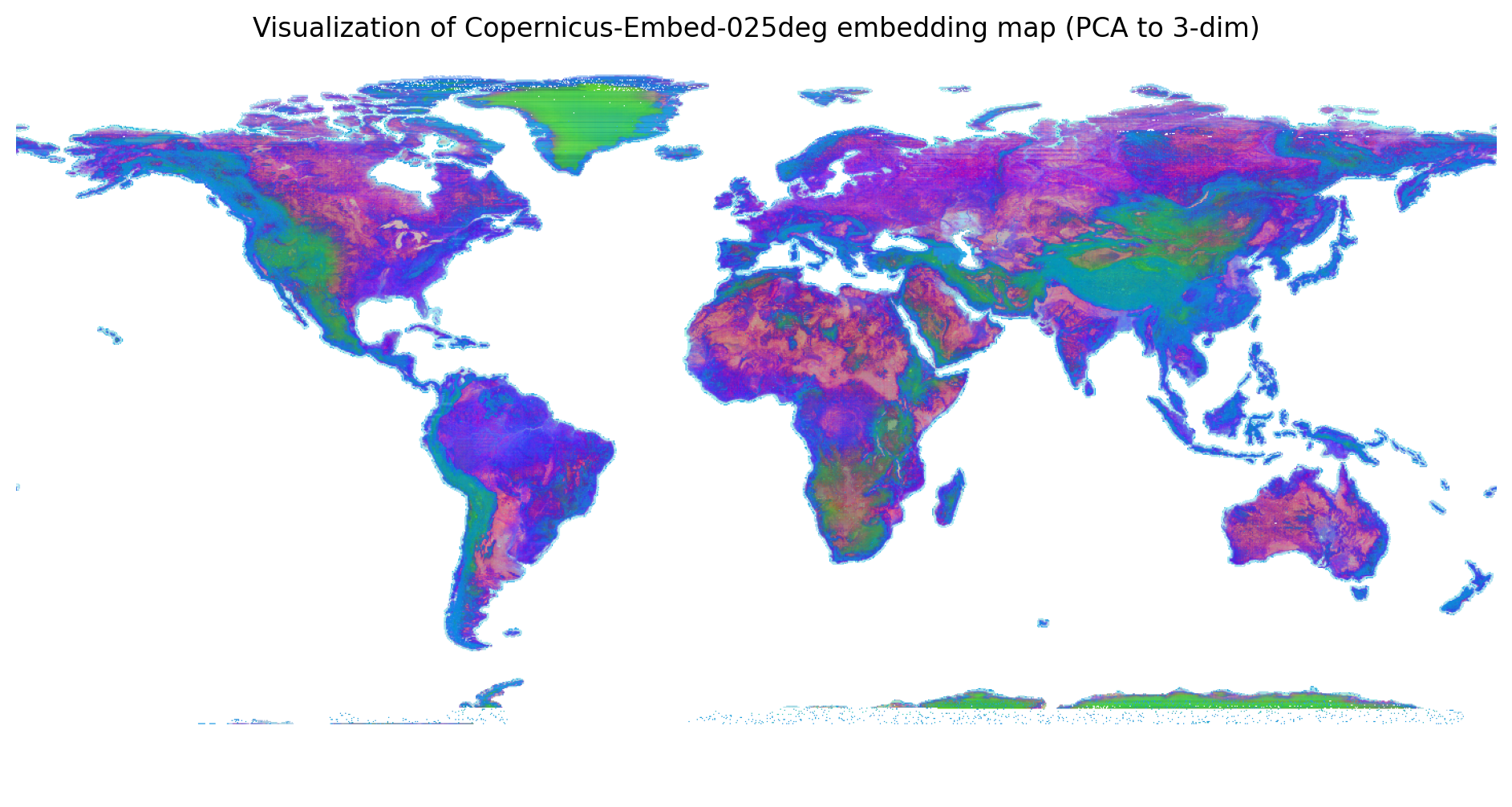
TorchGeo was the first library to provide pre-trained geospatial foundation models, and offers more GeoFMs than all other GeoML libraries combined [1]. Users have always had the ability to generate their own embeddings using TorchGeo. However, using FMs requires considerable expertise and compute, preventing widespread adoption.

...
Lire la suite →
Mapping the Hollowing of the United States

Mapping the Hollowing of the United States

The American population is moving south and west. You can see that migration writ large in the US Population Growth Atlas, an interactive map showing how the populations of every US county and state have changed between 1980 and 2025.

The most striking feature of the map is the broad band of population decline running through the middle of the country. From the Dakotas and Montana, south through Nebraska, Kansas and Oklahoma and into parts of West Texas, large numbers of counties are coloured red or orange. It is an “Emptying Middle” separating the rapidly growing populations of the coasts and the Sun Belt.

...
Lire la suite →

PostGIS Development: PostGIS 3.7.0beta2

The PostGIS Team is pleased to release PostGIS 3.7.0beta2! Best Served with PostgreSQL 19 Beta2 and GEOS 3.15.0beta2.

This version requires PostgreSQL 14 - 19beta2, GEOS 3.10 or higher, and Proj 6.1+. To take advantage of all features, GEOS 3.15+ is needed. To take advantage of all SFCGAL features SFCGAL 2.3.0+ is needed.

This release contains fixes and enhancements since 3.7.0beta1 release.

...
Lire l'article complet ↗
QField: Faster Project Creation: Introducing Cloning and XLSForm Imports in QFieldCloud

QField: Faster Project Creation: Introducing Cloning and XLSForm Imports in QFieldCloud

We’ve overhauled the project creation flow in QFieldCloud to make getting your field data campaigns off the ground faster than ever. Along with a clean new web interface, we are introducing two highly requested features to boost your team’s productivity: more advanced project creation, with native XLSForm imports and 1-click project cloning! 🚀

Revamped basic project creation

When creating a new project, you can now define the initial extent field right away. You can also configure a basemap using OSM or a custom XYZ layer. What is more, you can set whether you prefer to keep the original color, or convert the basemap into dark or light themes.

XLSForm imports: a new path of survey creation

We are also thrilled to introduce a completely new way to generate projects: XLSForm support.

...
Lire la suite →
GIScussions: Mapping Maps in the Wild – a complex collaborative project

GIScussions: Mapping Maps in the Wild – a complex collaborative project

Maps in the Wild

Mappery has been my side project for 8 years, for the last 5 or 6 years Arnaud Ferrand has been my co-editor and the tech brain that keeps the site running. Mappery is a large WordPress site with 2,500 posts and 3,500 images of Maps in the Wild (pictures of maps in the street, on clothes, furniture, alcohol etc).

For several years we had a map plugin that allowed us to enter a coordinate pair for a post and to render a clustered map with pins representing each post, click on a pin and the post image and some text appears in the popup with a link to the post. It worked ok but the map used the Google Maps API which had cost implications and we also had several complications with the map not rendering and the plugin wasn’t being maintained.

...
Lire la suite →
Free and Open Source GIS Ramblings: MovingPandas 0.23 released!

Free and Open Source GIS Ramblings: MovingPandas 0.23 released!

The new MovingPandas release 0.23 has just landed in pypi and conda-forge and I want to share with you two highlights:

New HTML representations

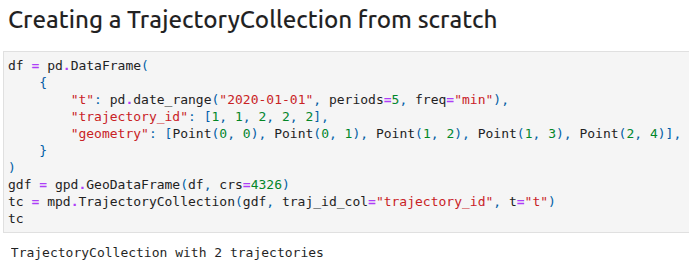
The new HTML representations for Trajectory & TrajectoryCollection objects aim to make interactive data exploration in notebooks more convenient by providing commonly required descriptive data summaries and data previews in a structured way.

Before 0.23

New in 0.23

...
Lire l'article complet ↗
7 Billion People Are Awake Right Now

7 Billion People Are Awake Right Now

At the moment (as I write), 6.962 billion people are awake, while another 2.1 billion are fast asleep. Awake Globe visualizes this constantly shifting global rhythm of sleep and wakefulness, revealing where people around the world are currently awake, asleep, or somewhere in between.

The map presents the Earth as a glowing, rotating globe. Daylight sweeps across its surface at around 1,000 miles per hour (at the equator), while millions of tiny coloured points show where people are currently awake or asleep. Blue represents people who are tucked up in bed, while green indicates those who are awake, with a spectrum of colours in between showing the gradual transition from sleep to wakefulness.

...
Lire la suite →
CastleGuessr

CastleGuessr

I had determined not to post about Castle Map despite it being written about extensively elsewhere. There are already hundreds of maps of castles around the world and, although I have nothing against AI-generated maps, this one struck me as particularly uninteresting.

That first impression wasn't helped by the site's design. Castle Map takes the illegible grey-text-on-a-black-background AI design trend to even greater lengths by applying the same colour scheme to the map itself, with dark grey land set against a black sea. Not only are the menu options in the legend almost impossible to read, but the map itself is barely legible.

However, today I discovered that Castle Map includes a neat GeoGuessr-style game: CastleGuessr. 

...
Lire la suite →
Ecodiv.earth: m.printmap, a new addon to create maps in GRASS

Ecodiv.earth: m.printmap, a new addon to create maps in GRASS

For reports, presentations, and websites, I regularly need maps: a raster layer, contextual boundaries, a legend, and maybe a logo. Nothing requiring an elaborate page layout. And I often need more than one. For the COMBINED project, for example, I map the same study area in Rotterdam over and over. The extent, the boundaries, and the logo stay put; only the raster and its legend change. Exactly the kind of repetition worth automating.

...
Lire la suite →
Fernando Quadro: Curso de Geotecnologia com InteligĂȘncia Artificial

Fernando Quadro: Curso de Geotecnologia com InteligĂȘncia Artificial

A InteligĂȘncia Artificial jĂĄ estĂĄ transformando a maneira como profissionais GIS analisam dados, automatizam processos e desenvolvem soluçÔes geoespaciais.

Neste curso, vocĂȘ aprenderĂĄ a aplicar IA generativa, agentes inteligentes e automação em ferramentas como QGIS, PostGIS, GeoServer e GeoNode, por meio de cases, exercĂ­cios prĂĄticos e problemas inspirados em projetos reais.

VocĂȘ verĂĄ como utilizar IA para gerar e revisar consultas SQL espaciais, detectar inconsistĂȘncias, corrigir geometrias, automatizar publicaçÔes no GeoServer, criar estilos SLD, produzir metadados, analisar dados no QGIS e desenvolver fluxos geoespaciais mais inteligentes.

...
Lire la suite →
A World of Plane Crashes

A World of Plane Crashes

If you are already afraid of flying then you might want to give CrashAtlas a miss. This interactive map of aircraft accidents is unlikely to do much for your aerophobia. On the other hand, if you've ever wondered whether a plane has crashed near your home, then CrashAtlas may prove to be a fascinating, if slightly macabre, diversion.

CrashAtlas is a global interactive map dedicated to documenting the history of aviation accidents and incidents around the world. The map plots thousands of crash locations, allowing you to explore where aviation accidents have occurred geographically. 

...
Lire la suite →
Isometric San Francisco

Isometric San Francisco

Following the success of Isometric NYC, it was probably only a matter of time before another city received the same pixel-art treatment. Now Isopolis - San Francisco has recreated the City by the Bay as a sprawling isometric world that looks as though it has been lifted straight from the golden age of SimCity.

From the skyscrapers of the Financial District to the city's famous hills, bridges and waterfront, San Francisco has been transformed into a giant retro cityscape that invites endless exploration. SimCity fans will immediately recognize the aesthetic. The map captures San Francisco as a dense tapestry of tiny buildings, winding streets, parks and piers, all rendered in a consistent pixel-art style. 

...
Lire la suite →

Propulsé par FreshRSS | 235 articles dans cette sélection