OSGeo Announcements: [OSGeo-Announce] OSGeo Charter Member election 2026 results
Dear all,
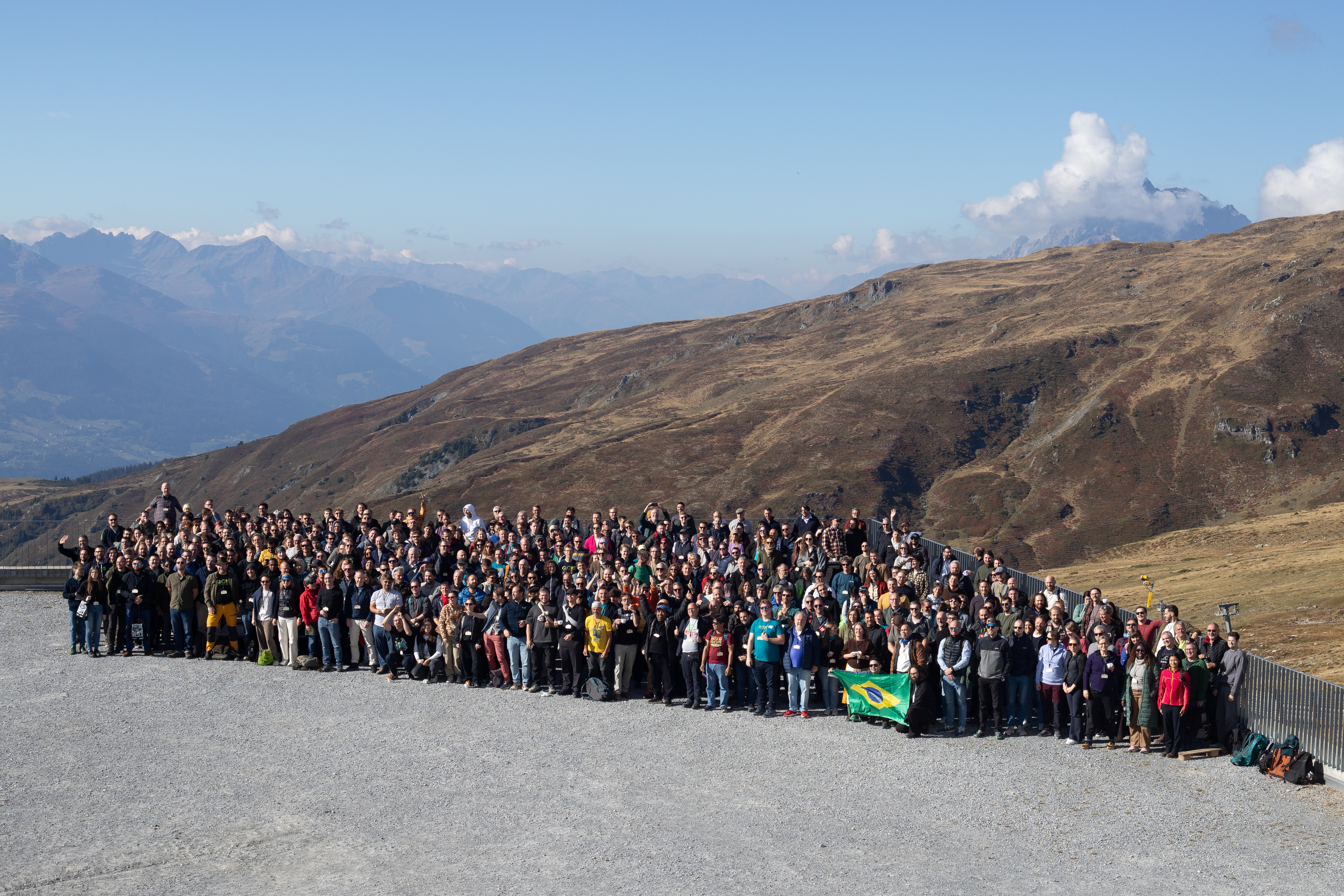
The CRO is pleased to announce the list of new OSGeo Charter Members.
...


|
Agrégateur de flux RSS - Actualités et contenus géomatiques
Dear all,
The CRO is pleased to announce the list of new OSGeo Charter Members.
...
On October 19, 2026 the GeoServer project announced three releases: 3.0.2, 2.28.6 and 2.27.7. For most deployments these are maintenance and security updates. For organizations that must run their geospatial infrastructure under formal cryptographic requirements, 3.0.2 carries something more: a new FIPS community module, developed by GeoSolutions, that lets GeoServer run on top of a FIPS 140-3 validated cryptographic module. In this post we look at what the module enables, the engineering behind it, and what teams should plan before adopting it.
...
Non-Governmental Organizations (NGOs) are key actors in the conservation and restoration of ecosystems worldwide. However, practice-oriented conservation groups face a major hurdle: evaluating the real-world impact of their management activities over large geographic areas. Traditional monitoring methods rely on labor-intensive on-the-ground surveys, which are difficult to sustain at scale. While satellite Earth Observation (EO) data, such as Copernicus Sentinel-2, offer wide-scale coverage and long-term time series, using them effectively requires complex domain knowledge, spatial data handling, and specialized data processing skills.
This week’s challenge is:
...
As part of our Security project for QGIS initiative, we identified a work package titled “Improve Memory Safety.”
Having worked on this topic over the last few months, here is a summary of the issues involved and what has been accomplished so far.
It’s not an easy thing to present this topic. I’ll try not to dive into too much technical details to focus instead on the broader objectives and implications.
...
Soon after I posted my One Hundred Famous Views of Edo Map, Keir Clarke posted about another map of Japanese woodblock prints on his Maps Mania blog, well worth a read if you want to learn a bit about Japanese landscape art in the 19th C. It turns out that there are a lot more than Hiroshige’s One Hundred (which are actually 119) and someone had made a map of 297 of these prints across 5 series which had lost its base map and had a couple of other glitches. Keir threw down a challenge “Perhaps Steven could take a sneak peek at the map’s JavaScript, which contains the coordinates of all the woodblock prints featured, and use them to expand the scope of his own map.â...

Visualisation is a key part of any analysis. It is useful not only at the end, when presenting the results, but also throughout the analysis itself. A quick plot can help you interpret intermediate results and decide what to do next.
R and Python offer excellent tools for creating visualisations. When working in GRASS, however, I do not always want to export or reshape the data, or have to remember, or look up, the code needed to create a simple figure. Sometimes, I just want to create a plot directly from within GRASS. At the same time, it should offer enough options to fine-tune the result for online or print publication.
...The PostGIS Team is pleased to release PostGIS 3.7.0! Best Served with PostgreSQL 19 RC 1 , GEOS 3.15.0 , postgis_tiger_geocoder 2025.2 , and address_standardizer.
...
Doug Greenfield posted his Map of the Week – Map of the 100 Famous Views of Edo saying “The Wikipedia listing has a table listing each print with an image, title and geographic coordinates. Somebody with more time and better programming skills could make a nice interactive map from this table with popups at each location.”
Well I have the time and an AI with some programming skills so I thought “Why not?”
So I asked Claude:
...
In geospatial research and software engineering, we frequently encounter a persistent paradox: sophisticated platforms, cutting-edge hazard models, and rich spatial data infrastructures are built with tremendous technical skill and effort – but lack uptake. Why? Because the development process often occurs in isolation from the operational realities, decision-making pressures, and daily workflows of end-users.
When addressing complex crises like climate change adaptation (CCA) and disaster risk management (DRM), a purely top-down or tech-driven development approach routinely fails. Emergency responders do not need generic GIS viewers with a multitude of layers and tools; civil protection officers require clear, actionable, and rapid information products that answer specific questions during an evolving crisis.
This leads to this week’s challenge:
...Sorry, this entry is only available in French.
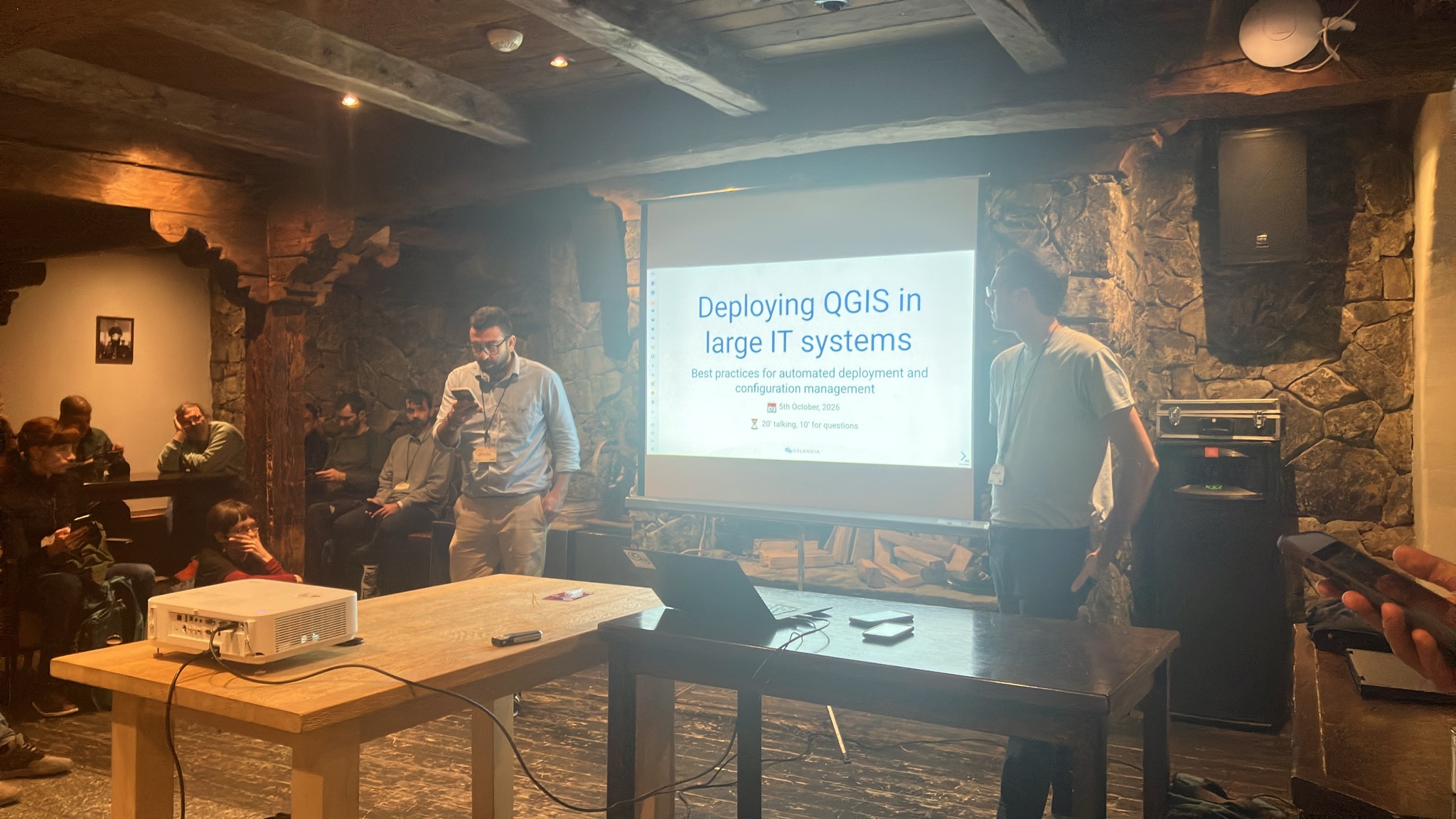
Oslandia took part (actively!) in the QGIS User Conference 2026, which was held in early October in Laax, Switzerland.
The teams led four workshops and talks on the first day:
The second day provided an opportunity to attend talks and forge links with the international community!
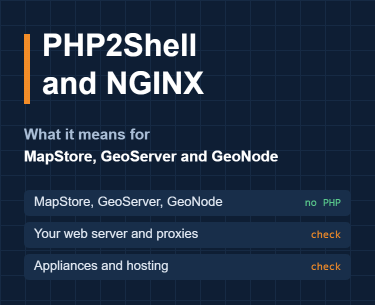
On 21 October 2026 the PHP project released fixes for two critical vulnerabilities, CVE-2026-109618 and CVE-2026-109619, now known as PHP2Shell. They allow unauthenticated remote code execution on web servers running PHP. Exploitation attempts were observed even before public disclosure. The UK NCSC has issued an alert asking organisations to find and patch every PHP installation, and to take offline what they cannot fix.
Since then we have been receiving questions from organisations running our open source products. Here is the short answer, and what we suggest you check.
Are MapStore, GeoServer and GeoNode affected?No since none of them uses PHP.
...
TLDR; Direct stemmen via https://geomares.typeform.com/to/YUyu9jo8 .
De vakvereniging Geo-Informatie Nederland (GIN) reikt jaarlijks vakprijzen uit, de Geo Prestige Awards. Er zijn drie categorieën: Professional, Startup en Organisatie. OSGeo.NL is genomineerd in Organisatie.
Genomineerd…, maar nu willen we natuurlijk ook winnen! Daarom vragen wij iedereen die OSGeo.nl, FOSS4G.nl, de PostGISdag en alle open source geo software een warm hart toe draagt om op ons te stemmen!
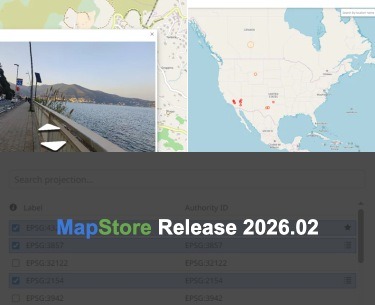
Here is a closer look at the highlights of the new series 2026.02 of MapStore, our flagship Open Source WebGIS product. On GitHub it is possible to consult the full list of new features, enhancements and fixes we have provided in version 2026.02.00. You can try it right away on the MapStore demo.
...
As you all know by now, the php2shell vulnerability was disclosed and is wreaking havoc all across the technology landscape wherever a PHP installation is involved as everybody is frantically patching their PHP installs to mitigate this vulnerability.
Since MapGuide bundles PHP, this vulnerability sadly also affects us as well and I feel obligated to at least post something about this.
So here's the current situation of this vulnerability in the context of MapGuide.
...
52°North and Open Science? Nothing new here, but we’re not interested in a casual relationship. We want to make it official. Therefore, this week’s blog post isn’t about how we address a particular challenge, it’s about making a formal commitment to Open Science practices! To show our dedication, we are signing the NFDI4Earth FAIRness and Openness Commitment.
The NFDI4Earth FAIRness and Openness Commitment aims to promote the implementation of open practices and is composed of twelve items. Signing this commitment publicly signals agreement with the goals, mission, and products of NFDI4Earth.
In the following paragraphs, we will elaborate on 52°North’s commitment to the twelve items.
...The PostGIS Team is pleased to release PostGIS 3.7.0rc3! Best Served with PostgreSQL 19 RC 1 , GEOS 3.15.0 , postgis_tiger_geocoder 2025.2 , and address_standardizer.
...In water resources administration, the difference between reactive management and sustainable governance lies in data quality, process efficiency, territorial vision, and technological autonomy. With the launch of our new dedicated website at sirh.icarto.es, we want to highlight the main reasons why river basin authorities choose the Water Resources Information System (SIRH) by iCarto.
...Prezados leitores,
Sempre que preciso instalar uma nova instância do GeoNode, sigo os procedimentos que já compartilhei aqui no blog:
– Instalação do GeoNode 5 no Ubuntu 24.04
– Instalação do Certificado SSL no GeoNode
– Atualizar camadas do GeoServer para o GeoNode automaticamente
O passo a passo ajuda bastante, mas, a cada instalação, lá estava eu novamente: preparando o servidor, instalando dependências, criando o projeto, ajustando configurações e habilitando o HTTPS.
Ao preparar um ambiente para mais um curso, pensei: por que não automatizar esse processo?
...A student finishes a QGIS exercise, saves the project and sends the file to the instructor. The analysis is complete—but the map is still difficult to share with a colleague, a client or the public.
That last step, taking a desktop GIS project onto the web, is increasingly part of practical GIS training. A review of publicly listed courses turns up examples around the world that include QGIS Cloud in their teaching: from publishing a first web map to working with cloud databases and web GIS.
GeoServer 2.27.7 release is now available with downloads (bin, war, windows), along with docs and extensions.
This series has previously reached end-of-life, with this release issued to address an urgent bug or security vulnerability. Please apply this update as a mitigation measure only, and plan to upgrade to a stable or maintenance release of GeoServer.
...GeoServer 2.28.6 release is now available with downloads (bin, war, windows), along with docs and extensions.
...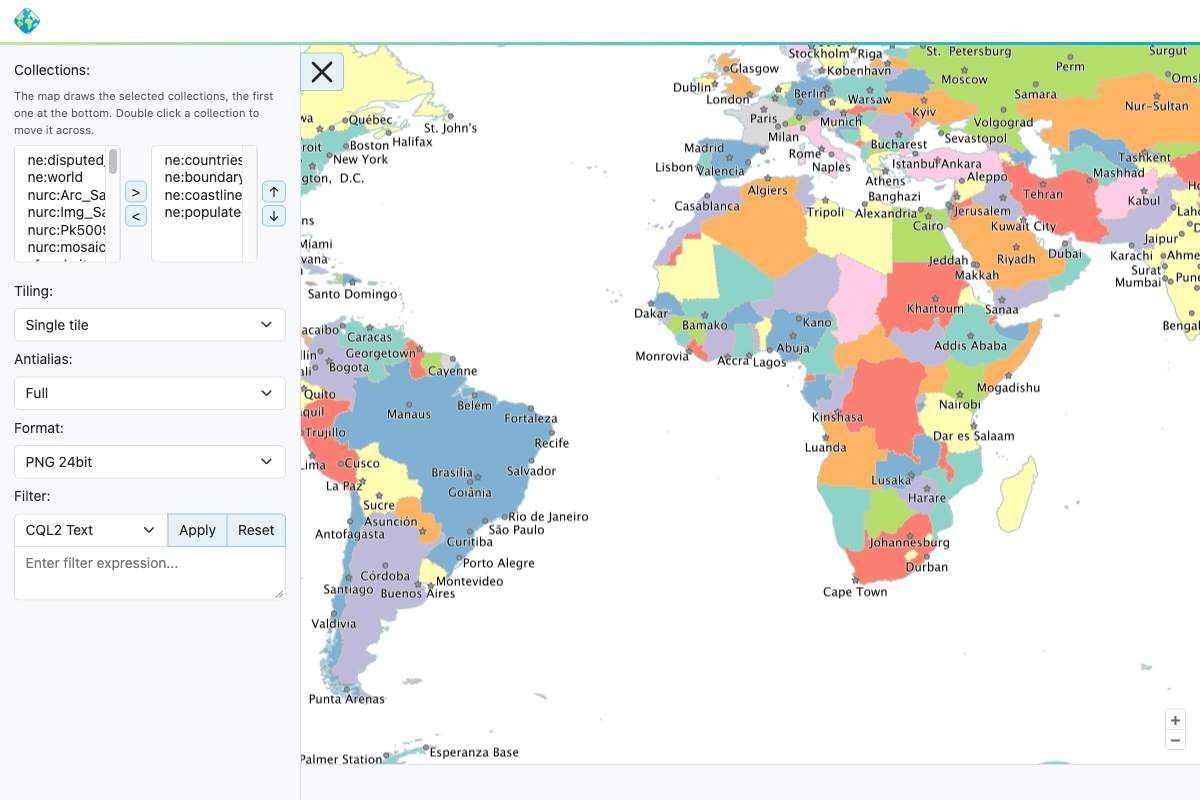
GeoServer 3.0.2 release is now available with downloads (bin, war, windows), along with docs and extensions.
...After writing about being laid off in April, I went almost five months without paid work. As I wrote in that post, I started with some severance. After that, I learned how to participate in Colorado's unemployment insurance benefits system. Just before reaching that program's limits, I was offered a position at Colorado State University, and I accepted. Colorado recorded 2,400 people hired in September 2026, and I was one of them.
...As I alluded to in my previous post, I've got a new job. I'm a research associate at Colorado State University, working at the Cooperative Institute for Research in the Atmosphere (CIRA). For the first time in over 20 years, I'm working for a local organization, the biggest local institution, in fact. Riding my bike to the office, learning to pack a lunch, all the things. I'm helping several research projects use satellite imagery to derive global cloud properties in near real-time.
Yesterday I attended an orientation session for new CSU employees. I've been married to a CSU professor for 21 years and already know everything there is to know about the school. Joining the employee union was a new experience. I wish there had been more of us.

A few people have asked how the scoring works, and one or two have asked, a bit pointedly, why their pin 40 km from Lagos only got half marks. Here’s the longer version of the info box: how to play, how the points add up, and where it all comes from.
The basicsEvery day you get 5 cities. For each one you drop a pin on a map with no labels: no names, no roads, just coastlines, borders, rivers and lakes. Then you answer 3 multiple-choice questions about the city.
...
Every day, a huge amount of spatial data is produced by public agencies, research institutes, companies, and other data providers. Spatial Data Infrastructures (SDIs) have been set up at local, national and international levels to bring these data and its metadata together and make it easier to find. Metadata standards have matured and been adopted along the way. And yet, users still struggle to find the right datasets.
...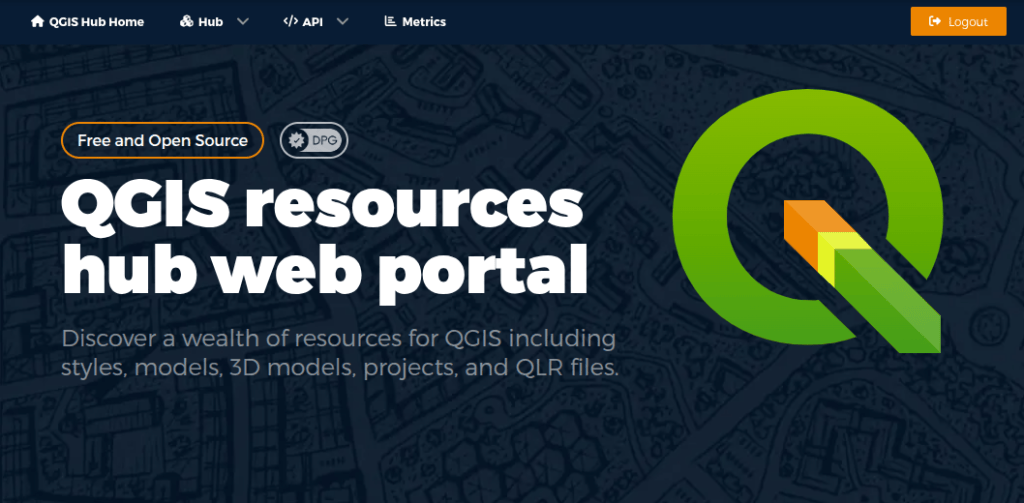
Everyone knows the QGIS Plugin Repo but have you had a look at the QGIS Hub yet?
It’s similar to the plugin repository in that it allows sharing of resources between community members, but it so many different types of resources, that warrants multiple blog posts: from styles and projects all the way to processing scripts.
Today, I want to have a look at the (a little cryptic) QLR option.
The QGIS Layer Definition (QLR) format makes it possible to share “complete” QGIS layers with other QGIS users. QLR files contain links to the data sources and all the QGIS style information necessary to style the layer.
...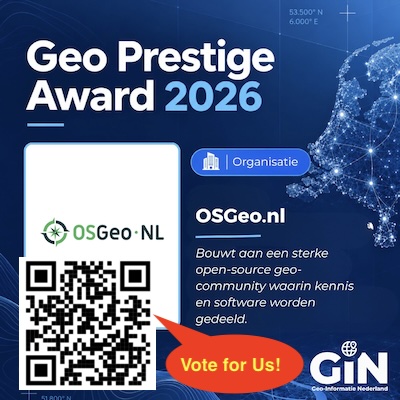
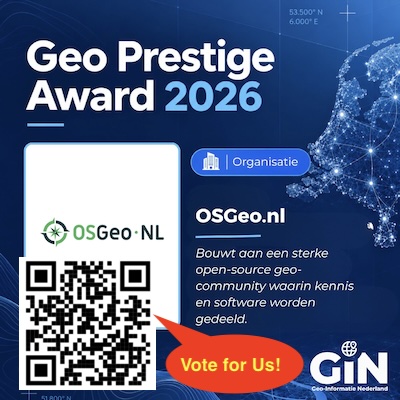
OSGeo.nl has been nominated for the most prestigious geo-award within The Netherlands: the Geo Prestige Award 2026. This is a callout to our community: vote for us!
TL;DR: Vote directly via https://geomares.typeform.com/to/YUyu9jo8 or click image above, or use QR. Sorry, form is in Dutch.
The professional association Geo-Informatie Nederland (GIN) presents annual industry awards known as the Geo Prestige Awards. There are three categories: Organization, Professional and Startup. OSGeo.NL has been nominated in the Organization category.
...
Dear Reader,
Here is a closer look at GeoNode 5.1.0, the first feature release built on top of the renewed 5.0 architecture. The release notes list everything in detail. Where GeoNode 5 was about rebuilding foundations, 5.1.0 is about putting those foundations to work. It significantly broadens the range of data GeoNode can catalogue and publish, and it tightens the controls around how that data is shared.
...
During a bit of football banter about League 1 over the weekend, Ken said to me “I bet you’ve never been to any of those places either. All a bit far north” – it turned out I had visited 18/24 of the places in the League. That prompted an idea for a geography quiz, could I make a quiz that combined pinning the locations of cities on a map with some general knowledge questions about those cities?
I started out with this prompt:
...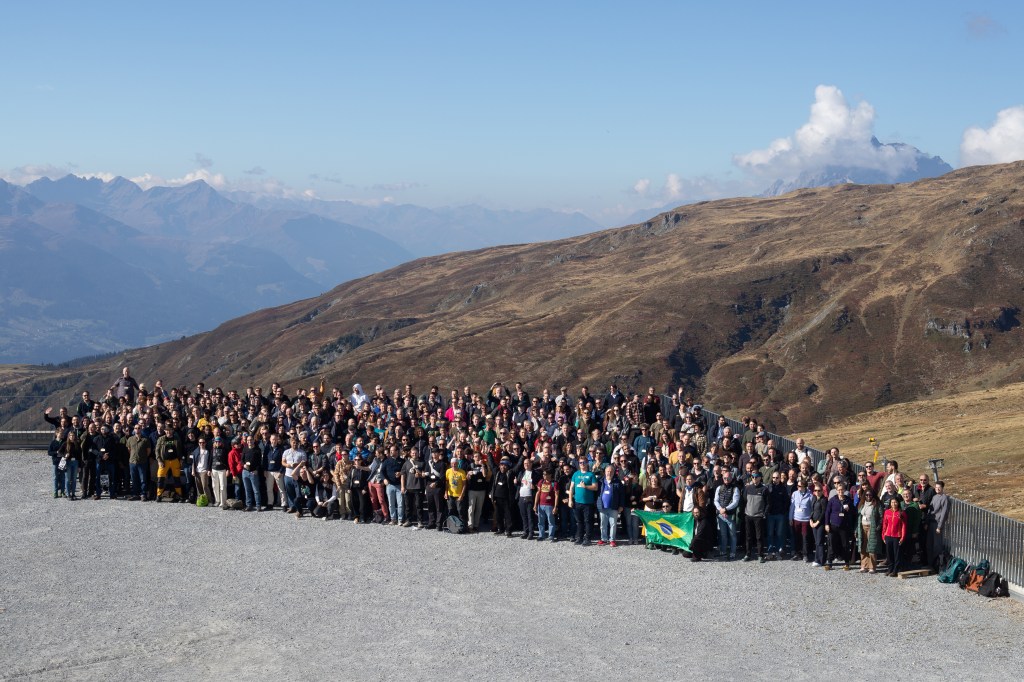
Laax, Switzerland, 10 October 2026. More than 420 people from over 30 countries and five continents gathered in Laax from 4 to 9 October for the QGIS User Conference 2026, the largest event ever held on Crap Sogn Gion at 2222 metres above sea level.

We see loads in the news about oil prices, the potential shortages caused by wars involving Iran and Russia and whether the UK should licence further oil extraction from existing oil fields in the North Sea. I wondered whether there was a mappy project opportunity around oil production and consumption. I started out with this prompt:
Claude found me these sources:
...
Dear Reader,
From November 2 to 4, 2026, GeoSolutions will be at FOSS4G North America 2026 in Sacramento, California, at the Sheraton Grand Sacramento. Simone Giannecchini and Andrea Aime will be there for the whole conference, from Monday to Wednesday. You will find them at our table in the exhibit area, where GeoSolutions is present as a Bronze sponsor, and in the session rooms for our four talks. If you want to talk about GeoServer, MapStore or GeoNode, write to sales@geosolutionsgroup.com and we will book a slot.
Our talksThis year we bring four talks, all in the Technical track and all presented by Simone and Andrea. Times are Pacific Time. The schedule can still change, so please check the official schedule before you go.
...
Two weeks ago, we explored Open Science capacity building in our blog post. We highlighted that the burden of responsibility shouldn’t fall solely on the researchers, noting the crucial role universities play in establishing policies and guidelines. In this week’s post, we carry this thought a bit further and address the challenge:
How to establish an Open Science ecosystem at research-performing organizations?
...
Quando uma infraestrutura geoespacial começa a ser utilizada por diferentes equipes de uma organização, chega um momento em que manter usuários e senhas diretamente no GeoNode deixa de ser uma boa estratégia.
O usuário já possui uma identidade corporativa. Ele já entra em outros sistemas com a mesma conta. Em muitos casos, seus grupos e perfis também já são gerenciados centralmente.
Nesse cenário, uma alternativa interessante é integrar o GeoNode a um provedor de identidade utilizando OpenID Connect (OIDC).
O objetivo deste artigo é mostrar um exemplo genérico de integração de um GeoNode 5 com um provedor OIDC, incluindo não apenas o login, mas também a utilização das claims retornadas pelo provedor para associar automaticamente o usuário aos grupos do GeoNode.
A arquitetura é aproximadamente esta:
...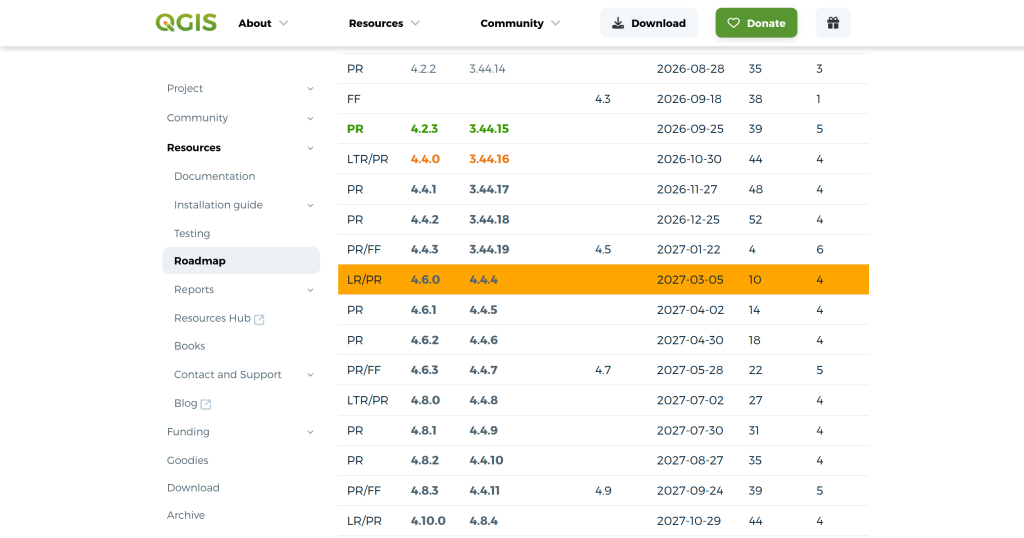
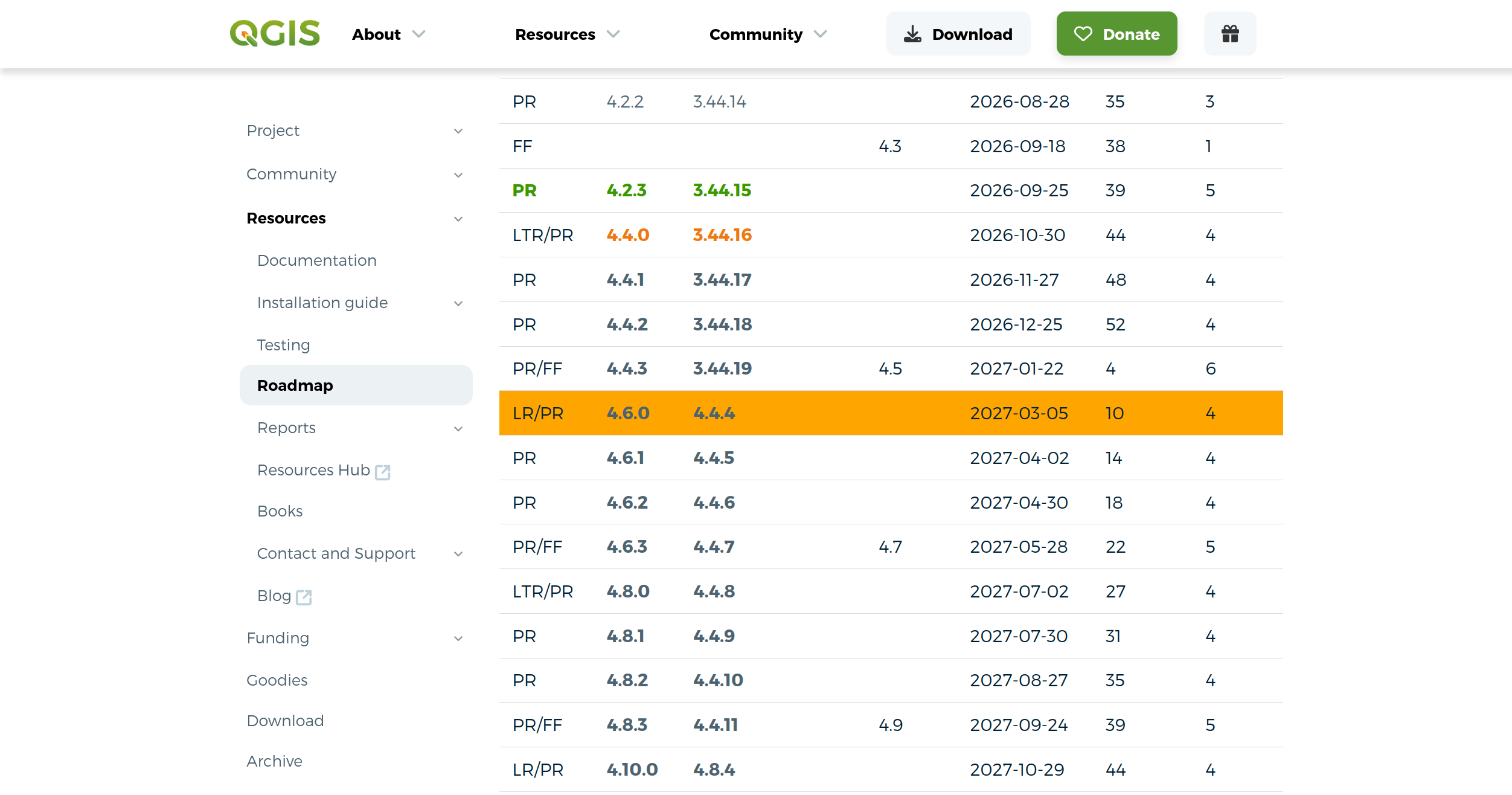
Dear QGIS community
We know that many of you were waiting patiently for the next LTR release based on QGIS 4.x and Qt6.
However, there are still a number of issues with the 4.x builds which leave us hesitant to assign LTR status to a 4.2.x release as originally planned. To address this, we will be taking the following steps:
...
A few weeks ago, Oslandia organized a webinar/roundtable discussion titled “Creating QGIS Plugins in 2026: Challenges, Expectations, and Concerns!” open to the international developer community.
The goal was to share our experiences as QGIS plugin developers—including our objectives, habits, and challenges—as well as to discuss the available tools.
This discussion was also a great opportunity to share our feedback as developers, identify needs related to QGIS plugin development, and explore ways to make the most of our development work.
If you missed the session, you can find the recording here: https://s.zoom.us/m/bPlTUNXA2
...
I finished my final race of the season and had fun doing it in spite of tough conditions. Here are the numbers for weeks seventeen and eighteen, including the Run Rabbit Run 50 mile:
31 hours, 12 minutes all training
75.93 miles running and hiking
11,929 feet D+ running and hiking
In week seventeen I tried to maintain a reasonable volume of training and do quality workouts. I ran four times, with some modest hills, and a fast group run at Pineridge. This was my last week of unemployment this summer, so I tried to enjoy going to bed early and sleeping late.
...
Sure, Open Science has gained some momentum during the last decade. The Horizon Europe programme supports a number of open infrastructure projects, one of them being AquaINFRA, and the next call is already out. The German National Research Data Infrastructure (NFDI) has just announced that funding will continue until 2038. And let’s not forget the local initiatives in universities, such as Open Science Communities, reproducibility networks, and research data management centers. We also talked about 52°North’s efforts in our blog post on Lire la suite →
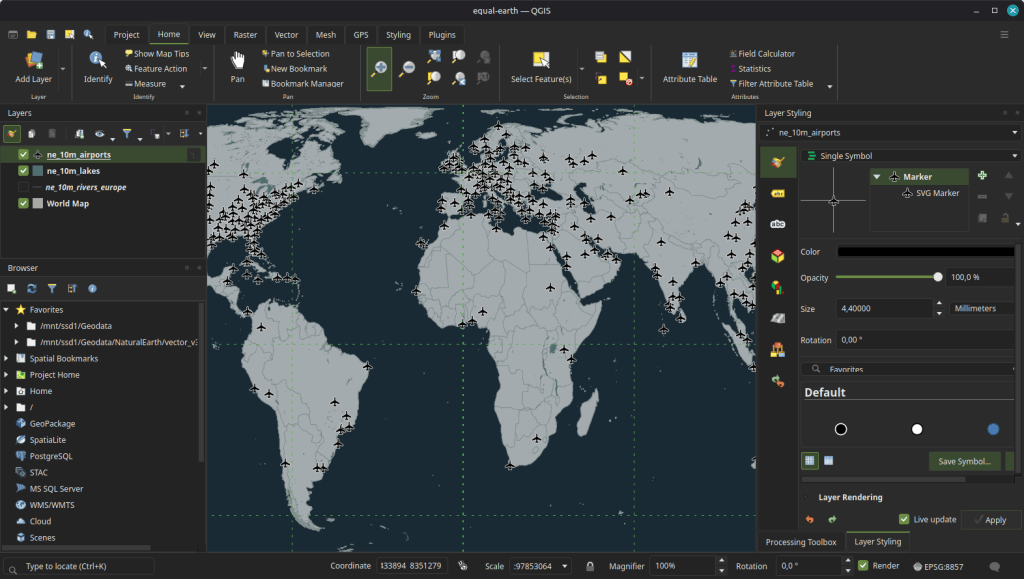
A long-standing feature request in the QGIS repo has been an option for a ribbon-style GUI to replace the plethora of toolbars that usually characterize the top rows of any QGIS window.
A couple of months ago Eithan published an experimental “Ribbon Toolbar” plugin for QGIS 3 that implemented a first version of this idea.
I recently picked up the threads, ported the plugin to QGIS 4 and continued refining the structure of the tabs and ribbons, cleaning up truncated labels, design logical groups, and making icons for the most commonly used functions (based on my subjective experience, not objectively measured) large / more prominent:
...Aujourd'hui j'ai mangé un homme. Cela faisait longtemps que je réfléchissais à réaliser cette expérimentation. Dans mon enfance, le dimanche matin, ma famille se mettait en ordre de marche dans la sérénité pour se rendre à la messe sur le coup des onze heures, accompagnée de la grand-mère, figure tutélaire dont le corps avait été marqué par la répétition des travaux agricoles et dont je revois encore le visage rougi par les braises de l'âtre du fournil alors qu'elle enduisait la galette de l'onction d'une généreuse noix de beurre. Arrivés devant l'église du village, les paroissiens franchissaient le seuil en pierre de taille pour s’assoir sur les bancs, dominés par un Christ en croix qui avant d'effrayer ces âmes paysannes séjournait au Parlement de Bretagne. Pendant une petite heure, la succession de lectures et chants conduisait l'esprit à se vider pour se préparer à la dégustation insipide du corps du Christ, cette hostie qui vous collait au palais...
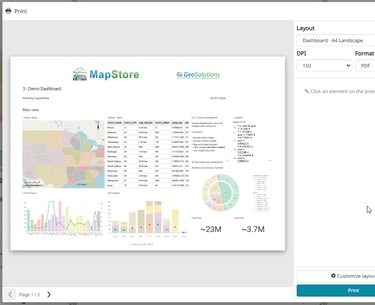
Printing in MapStore and GeoNode still relies on an ageing integration with MapFish Print 2, built around a single map. Dashboards, GeoStories and multi-page documents cannot be printed properly.
This year we built a working prototype of a new Print Composer: design the page, preview it live, print it. Maps, dashboards, GeoStories and atlases with one page per feature, rendered by a new open-source print engine built on GeoTools. You can see it in action in the 5-minute demo.
Atlas mode: one layout, one page per feature. Watch the full demo on YouTube.
...This is a bugfix and maintenance release. While there are no new features or API changes, this release includes important bug fixes, documentation improvements, and enhancements across datasets, models, tasks, and testing.
...
This post provides a recap of the security advisories published over the summer of 2026, covering recently published Common Vulnerability and Exploits (CVE), along with a supply chain advisory affecting the GeoServer project. This activity has resulted in an update to our security policy covering AI-assisted vulnerability reports.
If you are responsible for a GeoServer instance, the short version is: please update to GeoServer 3.0.1, GeoServer 2.28.5, or GeoServer 2.27.6.
...For most of its history, QGIS has been a desktop application. You installed it on your machine, loaded your data, ran your analyses, and produced your maps, all within the four walls of a single window. The browser was a separate universe. If you wanted your maps on the web, you exported them as images or handed them off to a completely different stack.
That boundary is dissolving. Over the past decade, QGIS has been quietly expanding beyond the desktop, first through server-side rendering, then through web standards, and now through WebAssembly. The line between “QGIS” and “the browser” is blurring, and the implications for how we build geospatial applications are significant.
For most of GIS history, the workflow has been the same: find a dataset, download it, unzip it, load it into your desktop software, and then work with it locally. It is a process that has served us well for decades, but it breaks down the moment your datasets are measured in terabytes, your users are spread across continents, and your analysis needs to be reproducible and collaborative.
A quiet revolution has been building in the geospatial community over the past few years. It does not have a single flagship product or a dominant vendor behind it. Instead, it is a collection of open specifications, open source tools, and a shift in thinking about how geospatial data should live in the world. This movement is called cloud-native geospatial, and it is changing the game.

Thanks to Zachary DeBottis
what3words’ 2025 accountsI am fascinated by what3words, it defies the laws of finance that apply to most businesses and shows how little my old fashioned understanding of business models is relevant in the modern tech economy.
The idea of a verbal description of a 3m square as a proxy for coordinates might have sounded like a good idea a decade ago but adoption seems to have been slow and new technology may be about to overtake the idea.
...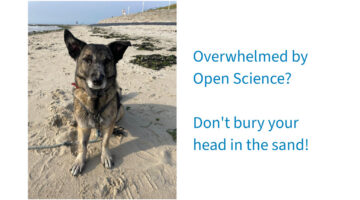
Open Science is about increasing the transparency, reproducibility, and reusability of research results. It touches upon data, software, infrastructure, Open Access to scientific papers and many other aspects relevant throughout the research process. However, for some reason (some people refer to the strong commercialization of scientific journals), Open Science used to be a niche topic and sharing research outputs was not the norm. Who hasn’t read about the infamous “We will share data upon request”? Fortunately, for more than a decade now, there has been a movement towards more openness; whether it’s the European Open Science Cloud, national initiatives like NFDI, or conferences pushing for more reproducibility like AGILE. UNESCO even released a whole Recommendation on Open Science a few years ago (see Fig. 1), which also considered societal aspects (e.g., Open engagement, Open dialogue) in addition to techn...
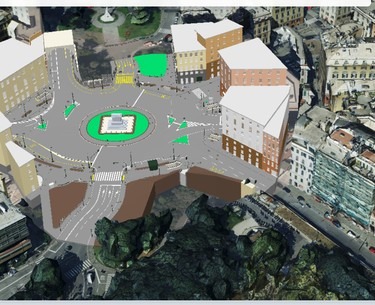
From November 3 to 5, 2026, GeoSolutions will be at Smart City Expo World Congress in Barcelona, Fira Gran Via, as part of the Italian Pavilion organised by ITA, the Italian Trade Agency. You will find Eleonora Fontana and the GeoSolutions team in Hall 2, Stand C161. If you are planning to attend and want to talk about geoportals, urban digital twins or open data infrastructure for your city, write to sales@geosolutionsgroup.com and we will book a slot at the stand.
...
After I had finished categorising all the posts on Mappery (see this post) it occurred to me that a similar strategy might be used for geocoding ungeocoded posts. If you have been following my vibe coding posts you will know that Arnaud and I built a geocoding and mapping plugin for our WordPress site that we are about to publish.
...Our DeepSeek credit spend has yielded thus far:
...
Prezado leitor,
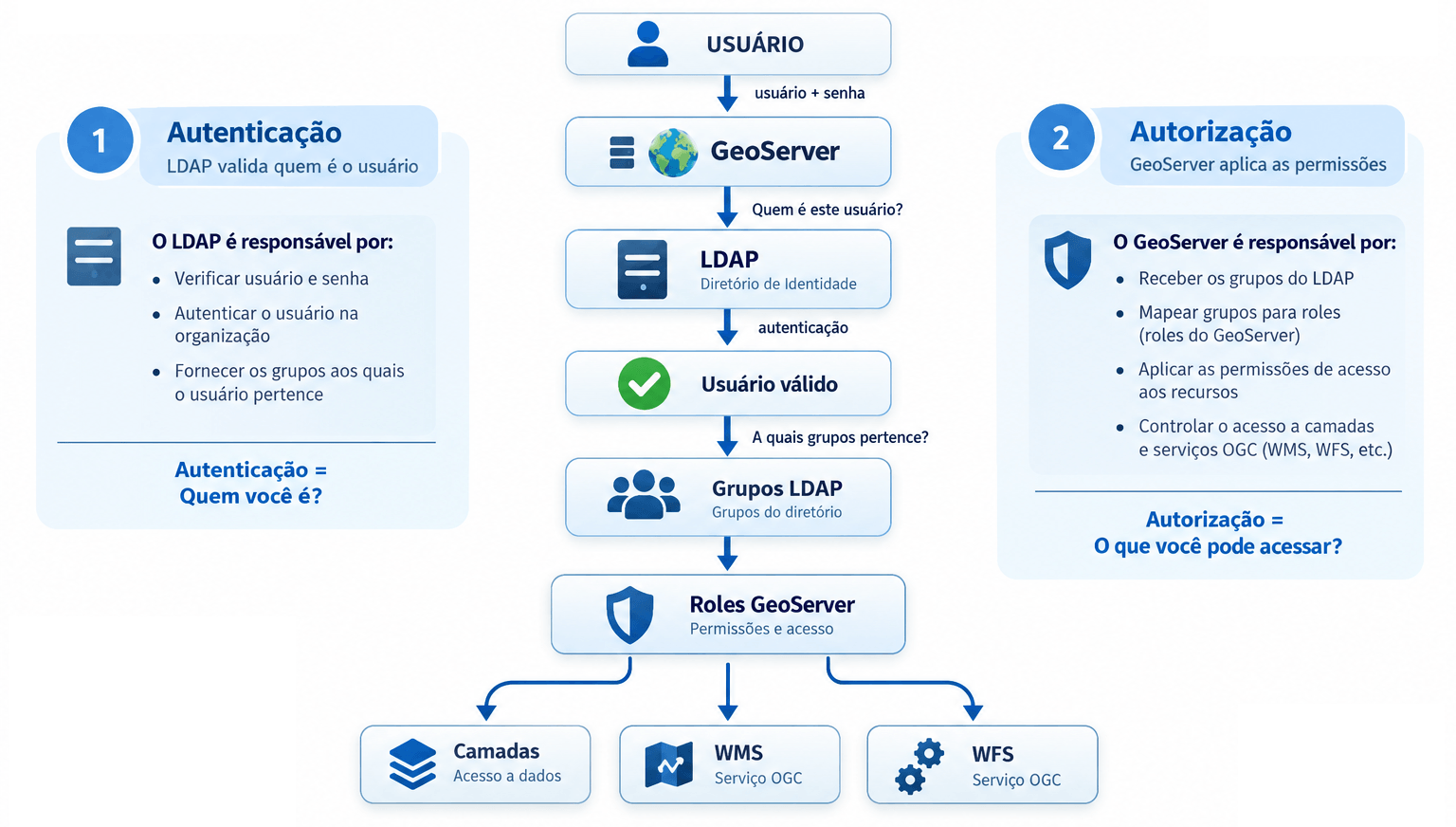
O intuito do post de hoje é que você aprenda como integrar o GeoServer a um servidor LDAP, autenticar usuários, transformar grupos LDAP em roles e preparar essas roles para utilização nas regras de segurança do GeoServer. O laboratório utiliza GeoServer 3, OpenLDAP e Docker Compose.
Em instalações simples do GeoServer é comum administrar usuários diretamente pela interface da aplicação. Esse modelo funciona bem em laboratórios, treinamentos e ambientes pequenos. Em ambientes corporativos, porém, normalmente a organização já possui uma infraestrutura centralizada de identidade. É nesse cenário que entra o LDAP (Lightweight Directory Access Protocol).
Em vez de manter usuários e senhas dentro do próprio GeoServer, podemos integrá-lo a um diretório LDAP e utilizar os usuários e grupos existentes na organização. A arquitetura passa a ser semelhante a esta:
...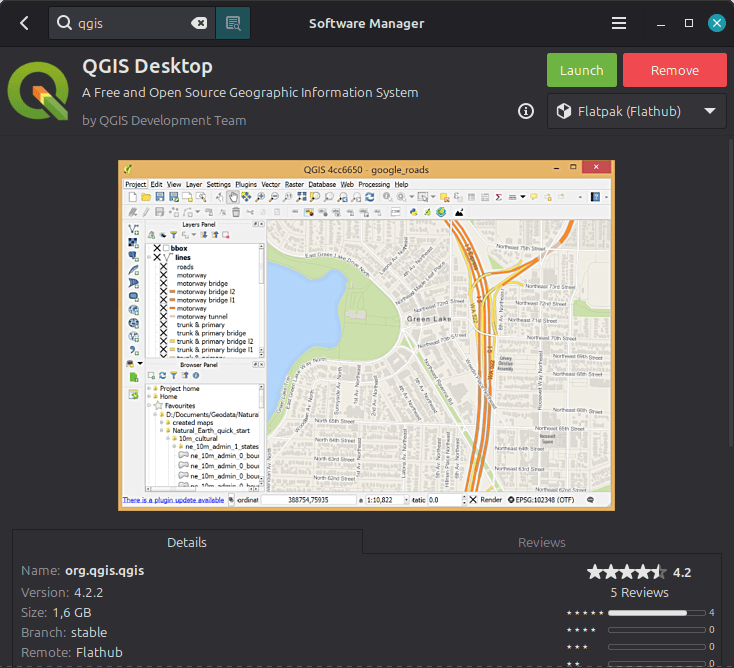
For a while now, my preferred way of installing QGIS has been from conda-forge. However, while we’re waiting for QGIS 4 to become available on conda-forge, there are alternatives:
Option 1: Flatpak
In the Software Manager, you can find QGIS from Flathub in two different versions: stable and lts. And stable should give you 4.2 (even if the Software Manager preview shows an older one):
Option 2: Meet the official QGIS Docker Images
...
On the Mappery site we have almost 2,400 posts on WordPress and we had never used the Category feature to sort them when we were adding posts. When we built the new Mappery Map Plugin for WordPress we included the option to only map posts in a specific category which we thought would be useful to some users in the future.Yesterday afternoon I wanted to see if there was a smart way to categorise 2,400 posts without stepping through each one in the WordPress edit interface which would have required time and dedication that I didn’t have!
I started out with this prompt:
...Biodiversity data is most valuable when it is shared. A river survey stored in a single database helps one team, but the same records, shared openly, can inform researchers, conservationists, and policymakers around the globe.
That is exactly what the Global Biodiversity Information Facility (GBIF) is for. It is the world’s largest open network of biodiversity data.
...Propulsé par FreshRSS | 193 articles dans cette sélection
| Communauté | Ressources | L'emploi | Le marché | L'association | Fils RSS | |
|---|---|---|---|---|---|---|
|
Forum Blogs Wiki Planet Sites amis |
Agenda Biblio Fiches AMO-CNIG Paris PCGIS Téléchargements |
Offres d'emploi Banque de CV Formations Démarche Métiers |
Geo-Entreprises Geo-Communiqué Appels d'offres |
L'association Qui sommes-nous ? Nous aider Bienfaiteurs Partenaires Historique Statuts |
Tout le site Job Géomatique Services GeoBlogs ... |
 Faire un don Mentions légales
|