Warning: Undefined array key "georezo_cookies_accepted" in /var/www/html/web/inc/menu.php on line 10
Nous utilisons des cookies pour vous garantir la meilleure expérience sur notre site. Si vous continuez à utiliser ce dernier, nous considèrerons que vous acceptez l'utilisation des cookies. J'ai compris ! ou En savoir plus !.

Planet GeoRezo

Agrégateur de flux RSS - Actualités et contenus géomatiques


[Témoignage client] Julien Girard Claudon, DSI LPO AuRA

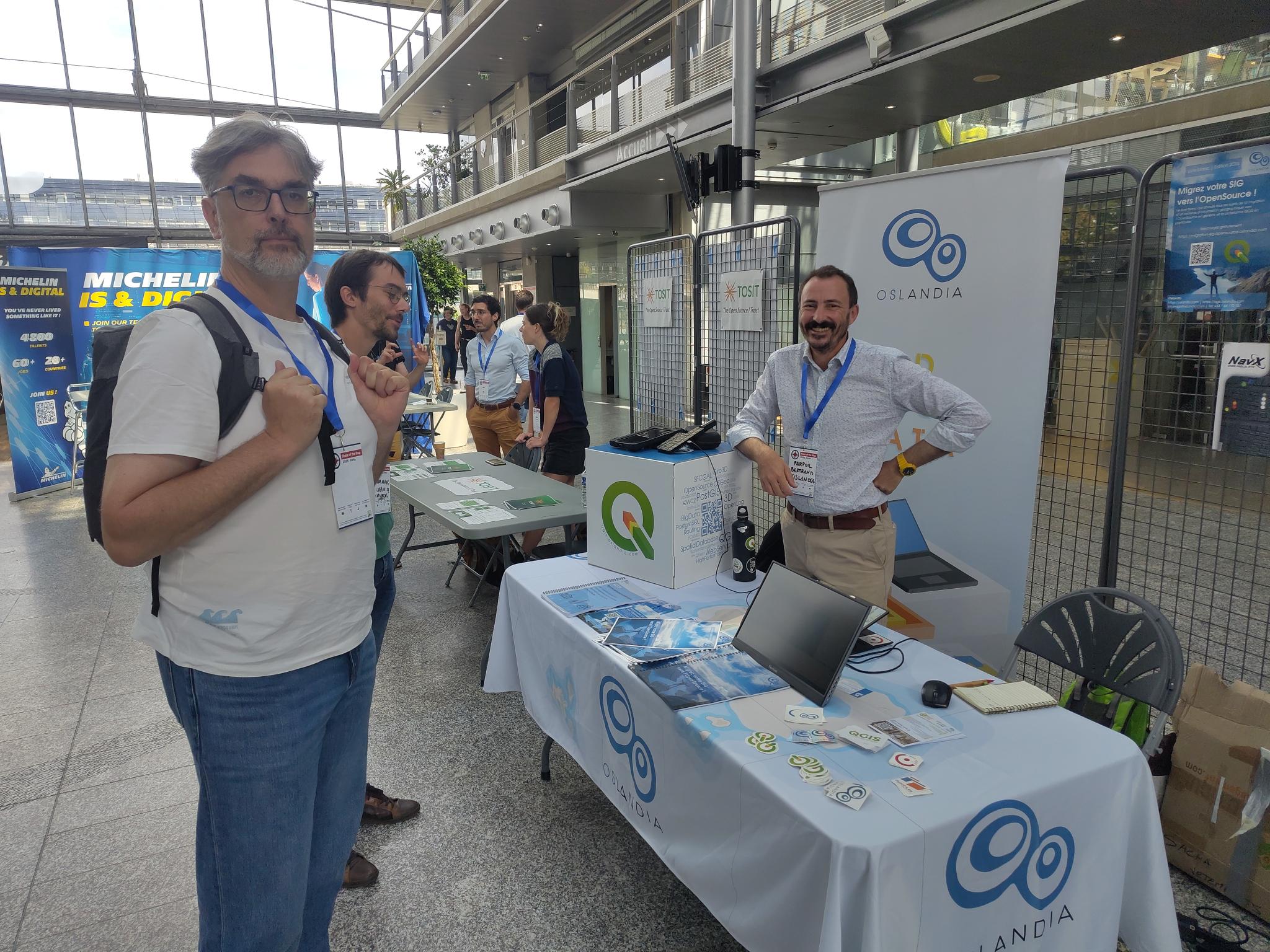
La LPO Auvergne-RhĂŽne-Alpes a pour missions l’étude, la sensibilisation et la protection de la biodiversitĂ© sur le territoire rĂ©gional. En Auvergne RhĂŽne-Alpes, l’ONG compte environ 150 collaborateurs et 500 bĂ©nĂ©voles. Julien Girard Claudon est responsable du pĂŽle SystĂšme d’Information de la LPO AuRA composĂ© de 4 personnes. Il revient sur la collaboration avec Oslandia.

Quels projets avez-vous mis en Ɠuvre avec Oslandia ?

Oslandia nous a accompagnĂ©s sur des formations QGIS : initiation et perfectionnement mais aussi sur l’administration QGIS et le dĂ©ploiement de QGIS au sein de la structure avec QDT.

...
Lire la suite →

Jackie Ng: New plans and stuff

So after finally getting MapGuide Open Source 4.0 out the door, I took a self-imposed hiatus from all things mapping/GIS related for several months, permanently moved from Windows to Linux as my daily driver OS just in time before the end of Windows 10 support, and also to mentally recharge and savor the relief of having this major burden (of releasing MGOS 4.0) being finally lifted off of my back.

I now return with a renewed vigor and some rough roadmaps for things going forward in MapGuide and my other various projects. Part of that renewed vigor is due to the advent of ...

...
Lire la suite →
Vers un SIG conversationnel : quand les Agents IA permettent de discuter avec vos cartes

Vers un SIG conversationnel : quand les Agents IA permettent de discuter avec vos cartes


Depuis plusieurs annĂ©es, les interfaces cartographiques ont Ă©voluĂ© vers toujours plus d’interactivitĂ©. Mais une rupture est en train de s’opĂ©rer avec l’arrivĂ©e des Agents IA et des LLM (Large Language Models) dans le SDK ArcGIS Maps for JavaScript. Avec la version 5.0, Esri introduit une nouvelle gĂ©nĂ©ration d’applications : des applications cartographiques “agentiques”, capables de dialoguer avec l’utilisateur en langage naturel.
DerriĂšre cette Ă©volution, c’est toute l’expĂ©rience utilisateur du SIG web qui est en train de se rĂ©inventer.
Du clic Ă  la conversation : un changement de paradigme
Historiquement, interagir avec une carte nĂ©cessitait de connaĂźtre les outils (zoom, filtre, requĂȘte
), ...
Lire la suite →
DĂ©mographie scolaire. Projections d’effectifs d’élĂšves dans les 1er et 2nd degrĂ©s Ă  horizon 2035 (DEPP)

DĂ©mographie scolaire. Projections d’effectifs d’élĂšves dans les 1er et 2nd degrĂ©s Ă  horizon 2035 (DEPP)


Source : AndrĂ©, P., Barhoumi, M., Miconnet, N., Serre, P. (2026). Projections d’effectifs scolaires Ă  horizon 2035, Note d'Information, n° 26-09, DEPP. https://doi.org/10.48464/ni-26-09

Les projections d’effectifs scolaires Ă  horizon 2035 s’inscrivent dans un contexte dĂ©mographique marquĂ© par une baisse des naissances amorcĂ©e depuis 2010 et qui s’est accentuĂ©e ces derniĂšres annĂ©es. Cette Ă©volution entraĂźne une diminution progressive de la taille des gĂ©nĂ©rations entrant dans le systĂšme Ă©ducatif, qui se traduit d’abord dans le premier degrĂ© avant de se rĂ©percuter dans le second degrĂ©. Au total, la baisse des effectifs s’établirait Ă  1,7 million d’élĂšves en dix ans, avec des Ă©volutions contrastĂ©es selon les acadĂ©mies et les dĂ©partements.

...
Lire la suite →

Calcul altimétrique

Présentation #

L’API de calcul altimĂ©trique de la GĂ©oplateforme permet d’obtenir l’altitude d’un ou de plusieurs points et un profil altimĂ©trique le long d’une courbe.

Son usage est limitĂ© Ă  5 requĂȘtes par seconde depuis une mĂȘme adresse IP.

Elle s’appuie sur des ressources altimĂ©triques pour fournir des altitudes. Ainsi, lancer un calcul en sollicitant une ressource altimĂ©trique basĂ©e sur la donnĂ©e RGE ALTIÂź donnera un rĂ©sultat diffĂ©rent du mĂȘme calcul sollicitant une ressource altimĂ©trique basĂ©e sur la donnĂ©e BD ALTIÂź, en raison des diffĂ©rences de rĂ©solution et de prĂ©cision entre ces deux produits.

L’API est interrogeable en mĂ©thodes GET et POST.

...
Lire la suite →

The Ancestry Dot Map of America

Inspired by Census Dots the interactive racial dot map of the 2020 U.S. Census - the Ancestry Dot Map applies a similar visual language to a different, and arguably more nuanced, dataset: reported ancestry.Like its predecessor, the Ancestry Dot Map uses colored dots scattered across the landscape of the United States. But instead of visualizing race at the individual level, each dot here
Lire l'article complet ↗

Grenoble: Atelier d'avril 2026 du groupe local OpenStreetMap, Le lundi 13 avril 2026 de 19h00 Ă  21h00.

Nous recevrons le groupe local de l'association RAP pour discuter de la cartographie des panneaux publicitaires.

Informations pratiques

  • Lundi 13 avril de 19h Ă  21h.
  • À la Turbine.coop, 5 Esplanade Andry Farcy, 38000 Grenoble. EntrĂ©e sur le cĂŽtĂ© du bĂątiment, nous serons dans la salle de rĂ©union au rez-de-chaussĂ©e.
  • Inscription souhaitĂ©e sur ce formulaire.
Lire l'article complet ↗
Nick Bearman: Generative AI Tools for Mapping

Nick Bearman: Generative AI Tools for Mapping

NCRM: Generative AI Tools for Quantitative Research

David Bann and Liam Wright have put together a great guide to Generative AI Tools for Quantitative Research on the NCRM resources site. This is a great overview of what Generative AI is, how it works and all of the potential different models available, both commercial and open source, as well as how to run some models locally rather than relying on the cloud.

They are also very focused on the practical elements of how to actually use the tools in your work, discussing the different approaches as well as highlighting the importance of making sure you do not share sensitive data with cloud services.

They also have a great selection of videos for setting up both cloud based and local LLMs for working with Stata and R scripts in a number of tools including VS Code:

...
Lire la suite →

The World in Motion

This animated map displays worldwide air temperatures over the past week. It illustrates how temperatures shift daily, warming progressively from east to west as the Sun rises and sets across the globe.You might also be able to spot other patterns, such as the effects of jet streams, periods of intense summer heat, and sharp temperature drops during winter when polar air moves southward.Recently
Lire l'article complet ↗

[FR]EPSG:4326 vs EPSG:3857 : comprendre la différence entre les deux systÚmes les plus utilisés en SIG

Lorsque l’on travaille avec des donnĂ©es gĂ©ographiques dans QGIS ou dans des applications web, deux systĂšmes de coordonnĂ©es reviennent trĂšs souvent : EPSG:4326 et EPSG:3857. Ces deux systĂšmes sont utilisĂ©s dans de nombreux contextes, mais ils


The post [FR]EPSG:4326 vs EPSG:3857 : comprendre la différence entre les deux systÚmes les plus utilisés en SIG first appeared on Blog SIG & Territoires.
Lire l'article complet ↗
Sean Gillies: Quad Rock training week 12

Sean Gillies: Quad Rock training week 12

In week 12, I started to get things back on track after being sick. I ran five days, biked one day, and took Saturday off to take my family to a Nuggets game in Denver.

  • 12 hours, 9 minutes all training

  • 34.8 miles running

  • 5,800 ft D+ running (and treadmill)

My energy level was low to mid until Friday, when I rallied for a good interval workout on a 12% incline treadmill indoors and a sauna session after. My fitness didn't advance much in week ten, but I didn't lose a step. According to the machine, I went "up" beyond any of the Quad Rock climbs, and at a pace that I'd love to hit on race day.

...
Lire la suite →
GIScussions: Critical Minerals – The Global Supply Chain

GIScussions: Critical Minerals – The Global Supply Chain

Listening to the news about the impact of the current war and the closure of the Strait of Hormuz, I was prompted to think about critical minerals that could also have massive disruptive impact in geopolitical turmoil.

I asked Claude “Can you build a dataset of the most critical minerals, where they are mined (mine sites or countries), shares of world production, price changes over 5-10 years, main usages so that we can build a map of these commodities. Build it in a way that we can extend if we find more data” and it found me some data using these sources:

...
Lire la suite →

The Politics of Street View

I’m really bad at BallotGuessr. The object of the game is very simple: you’re shown a Street View image and have to use the visual clues to decide whether the area voted Republican or Democrat - think GeoGuessr for psephology fans.If BallotGuessr were set in the UK, I’m confident I could correctly guess how a neighbourhood votes 99% of the time. But in the U.S., I really
Lire l'article complet ↗

200,000 Rivers Run Through It

The U.S. Geological Survey (USGS) has published a fascinating visualization exploring the language of rivers in the United States - a map that doesn’t just show waterways, but the words we use to describe them. Their Map that Glows with the Vocabulary of Water reveals how terms like arroyo, bayou, creek, and marsh are not randomly distributed, but instead cluster in ways that reflect the
Lire l'article complet ↗
Données de limites administratives à l'échelle mondiale (Banque mondiale)

Données de limites administratives à l'échelle mondiale (Banque mondiale)


L’accĂšs Ă  des donnĂ©es cohĂ©rentes, comparables et fiables dĂ©crivant les variations Ă  l'Ă©chelle infranationale constitue une difficultĂ© constante. Le Groupe des donnĂ©es sur le dĂ©veloppement de la Banque mondiale a lancĂ© un nouvel ensemble de donnĂ©es sur les frontiĂšres mondiales dans le cadre de son programme Space2Stats. Il couvre les pays (ADM0), les provinces/États (ADM1) et les districts (ADM2).

...
Lire la suite →
Ecodiv.earth: OmniCloudMask for cloud detection

Ecodiv.earth: OmniCloudMask for cloud detection

Introduction

Cloud masking is one of those steps you cannot really avoid when working with satellite data. Yet, it is often more cumbersome than it needs to be: different sensors come with different workflows, tools, and preprocessing requirements.

That is why I like OmniCloudMask. It is a Python library for cloud and cloud shadow detection in high to moderate resolution satellite imagery. Instead of relying on sensor-specific approaches, it uses a single model that generalizes across platforms.

According to the documentation, it supports resolutions from 10 m to 50 m and works with imagery from Sentinel-2, Landsat, PlanetScope, Maxar, and other sensors with Red, Green, and NIR bands. In practice, however, it also performs well on higher-resolution data, such as the 1.2 m Pléiades NEO imagery used in this example.

...
Lire la suite →
La ruralité à Mayotte, état des lieux post-Chido, par Monique Gherardi

La ruralité à Mayotte, état des lieux post-Chido, par Monique Gherardi

Monique Gherardi est gĂ©ographe et ingĂ©nieure en Science de l’Information GĂ©ographique Ă  l’UniversitĂ© de Montpellier Paul-ValĂ©ry. Au cours des trois derniĂšres annĂ©es, elle s’est consacrĂ©e Ă  la direction et l’écriture de l’Atlas de la ruralitĂ© mahoraise, publiĂ© en 2024 aux Ă©ditions Orphie. Cet atlas a pour objectif de conserver une mĂ©moire des espaces ruraux de Mayotte et d’aider Ă  mieux comprendre leur rĂŽle et leurs recompositions dans ce territoire. Co-Ă©crit avec de nombreux spĂ©cialistes, l’ouvrage est particuliĂšrement riche en documentation : 13 portraits de femmes et d’hommes, 64 cartes, 31 contributeurs, un artiste peintre, 180 personnes sollicitĂ©es, un lexique en shimaore/français/kibushi et prĂšs de 100 rĂ©fĂ©rences bibliographiques.

...
Lire la suite →

ASCII Mapping of Live Data

There’s something oddly satisfying about seeing the world reduced to text. The new ASCII OSM Viewer  leans fully into that aesthetic, turning modern web mapping into something that looks like it belongs on a terminal from the 1980s.Built by Lionel Lim, this browser-based experiment takes data from OpenStreetMap and renders it entirely using ASCII characters. The result is a playful but
Lire l'article complet ↗
Cartographie haute résolution des sols et des paysages de Grande-Bretagne

Cartographie haute résolution des sols et des paysages de Grande-Bretagne


Un nouvel ensemble de cartes haute résolution des sols et des paysages de Grande-Bretagne a été développé afin de soutenir les outils en ligne utilisés par les agriculteurs et les gestionnaires fonciers, ainsi que les futures recherches en sciences environnementales. Ces cartes, créées dans le cadre du programme AgZero+, visent à fournir des informations plus détaillées, harmonisées et facilement actualisables sur les aspects clés des sols qui sous-tendent les écosystÚmes et la production alimentaire du Royaume-Uni.

...
Lire la suite →

Sean Gillies: Quad Rock training week 11

I had big plans for week eleven and then came down with a cold. My Wednesday workout's mediocre feeling was the first indication. The rest of the week I shifted into recovery rides and easy runs.

  • 10 hours, 23 minutes all training

  • 19.2 miles running

  • 2,306 ft D+ running

It wasn't a terrible week, to be clear. I didn't fall apart physically, or anything like that. My concern is that it was the first week where I didn't progress very much in my Quad Rock training season.

Lire l'article complet ↗
GIScussions: Find Cheap Fuel Near Me – APIs and cron jobs

GIScussions: Find Cheap Fuel Near Me – APIs and cron jobs

Having knocked up a simple fuel finder based on a csv download from the government site at the beginning of the week I thought “How difficult could it be to make something more functional and elegant and connect to the government fuel finder API?” Answer – the “more functional and elegant” not too difficult – about 3 hours of vibe coding, Connecting to the API and refreshing regularly – pretty damn hard even with Claude helping me.

For comparison here is the first version using a downloaded file

The map pins are simple, the pop-up has limited info and worst of all there are all those miscoded petrol stations in the North Sea.

...
Lire la suite →

Real-Time Mapping of the Moon Mission

As part of NASA’s Artemis program to return humans to the Moon, Artemis II is sending four astronauts on a crewed journey around our nearest neighbor - an important step toward future lunar landings. I’m one of the many thousands of people currently hooked on NASA's Artemis II Live Mission Coverage on YouTube. It’s incredible to see live footage coming straight from the spacecraft and
Lire l'article complet ↗
Comment charger en masse une API IGN (altimétrie) avec DuckDB

Comment charger en masse une API IGN (altimétrie) avec DuckDB

Les API de l’IGN sont bien pratiques, plusieurs existent : calcul d’itinĂ©raires, d’isochrones autour d’une position, gĂ©ocodage d’adresses, ou calcul d’altitude en un point donnĂ©. Comme la plupart des API, on les utilise sous contrainte. Pour l’API altimĂ©trie : moins de 5 000 positions « alti-codables » par requĂȘte, et moins de 5 requĂȘtes par seconde. Avec plusieurs millions de positions Ă  coder, on peut s’attendre Ă  des heures d’interrogation, et des essais rĂ©pĂ©tĂ©s pour tenir compte des requĂȘtes rejetĂ©es.

...
Lire la suite →
GĂ©ographie mondiale du risque d’invasion vĂ©gĂ©tale

GĂ©ographie mondiale du risque d’invasion vĂ©gĂ©tale


Source : Omer, A., Dullinger, S., Wessely, J. et al. « The global geography of plant invasion risk under future climate and land-use changes » [La géographie mondiale du risque d'invasion végétale face aux changements climatiques et d'utilisation des terres futurs]. Nature, Ecology & Evolution (2026). https://doi.org/10.1038/s41559-026-03040-2 (article en accÚs libre).

...
Lire la suite →

Mini London 3D

Imitation is the sincerest form of flattery, which is why Mini Tokyo 3D cannot stop blushing right now.In 2019, Mini Tokyo 3D revolutionized the world of real-time transit mapping. By simulating Tokyo’s massive public transit system using stylized, 3D colored blocks, it allowed users to watch the city pulse in real-time.It is an aesthetic which has become much admired and replicated
Lire l'article complet ↗

OSGeo Announcements: [OSGeo-Announce] OSGeo Ambassador Programme: Call for Participation

https://www.osgeo.org/foundation-news/osgeo-ambassador-programme-call-for-participation/

In line with its commitment to increase the impact of the organization, OSGeo is excited to announce its new Ambassador Programme.

What is an OSGeo Ambassador?

Someone who helps OSGeo to grow its financial resources through fundraising. These are some fundraising activities that we would love for an ambassador to explore:
‱ Engage with Organizations such as the European Commission (EC), or the United Nations (UN), to seek grants and other opportunities.
‱ Liaison with commercial companies and acquire new sponsors.

We acknowledge that it may not be easy for everyone o approach many of these organizations. An ideal candidate would be someone who already has a strong professional network that they can leverage.

...
Lire la suite →

Volker Mische: Atmospheric data portals reply

This is a reply to David Gasquez’ blog post Atmospheric Data Portals. As there’s so much in it and much of it overlaps with future plans, I thought it makes sense to write a proper public reply instead of following up in a private conversation.

First of all, read his blog post and follow the many links, there is so much to discover.

One re-occurring thing in the documents linked from the “issues on the earlier stages of the Open Data pipeline” section is that for most portals a static site should be sufficient. I fully agree with that. When it’s done properly, an automated rebuild of some parts when new data is added should work well. These days even powerful client-sided search is possible.

...
Lire la suite →
Café géo de Paris, mardi 14 avril 2026 : Le Japon et le nucléaire : de Hiroshima à Fukushima, avec Philippe Pelletier

Café géo de Paris, mardi 14 avril 2026 : Le Japon et le nucléaire : de Hiroshima à Fukushima, avec Philippe Pelletier

Mardi 14 avril 2026, de 19h à 21h, Café de Flore, salle du premier étage, 172 boulevard Saint-Germain, 75006 Paris

Hiroshima et Fukushima sont deux lieux intimement marquĂ©s par le nuclĂ©aire, deux lieux emblĂ©matiques aussi de la relation singuliĂšre du Japon au nuclĂ©aire, qu’il soit militaire ou civil. Pour traiter de cette question, nous avons le privilĂšge d’accueillir au CafĂ© de Flore Philippe Pelletier, l’un des plus grands gĂ©ographes français actuels, qui vient de publier De Hiroshima Ă  Fukushima. Guerre, nuclĂ©aire et politique au Japon, Presses universitaires de Lyon.

Dans une perspective gĂ©ohistorique originale, Philippe Pelletier Ă©voquera les dynamiques Ă  l’Ɠuvre au Japon depuis les annĂ©es 1930, en relation avec les Etats-Unis, pour mieux comprendre le dĂ©veloppement d’un Ă©lectronuclĂ©aire civil forcĂ©ment liĂ© Ă  la question de la guerre et du nuclĂ©aire militaire.

Lire l'article complet ↗

Appel Ă  participation – Festival International de GĂ©ographie 2026

Appel Ă  participation – Festival International de GĂ©ographie 2026 Appel Ă  participation – Festival International de GĂ©ographie 2026 AfigĂ©o

La 37Ăšme Ă©dition du Festival International de GĂ©ographie de Saint-DiĂ©-des-Vosges se tiendra du 2 au 4 octobre 2026. Le thĂšme choisi est « paysage » et les pays invitĂ©s seront la Bulgarie et la Roumanie. En tant que partenaire organisateur de l’Espace GĂ©o-NumĂ©rique et Carto, l’AfigĂ©o vous encourage Ă  participer Ă  ce grand festival dĂ©diĂ© Ă  la gĂ©ographie. [
]

The post Appel Ă  participation – Festival International de GĂ©ographie 2026 first appeared on AfigĂ©o.
Lire l'article complet ↗

Convertir un lien Géoportail

Vous avez inséré sur votre site une carte créée sur le Géoportail ou partagé une donnée via un lien (permalien) ? Pour garantir la pérennité de ces accÚs, vous devez les rendre compatibles avec cartes.gouv.fr.

Le convertisseur de permaliens est un outil simple qui permet de convertir vos anciens liens en quelques secondes.

Comment faire ?

  1. RĂ©cupĂ©rez votre lien GĂ©oportail actuel ou le code «Â